
Last updated November 15, 2026
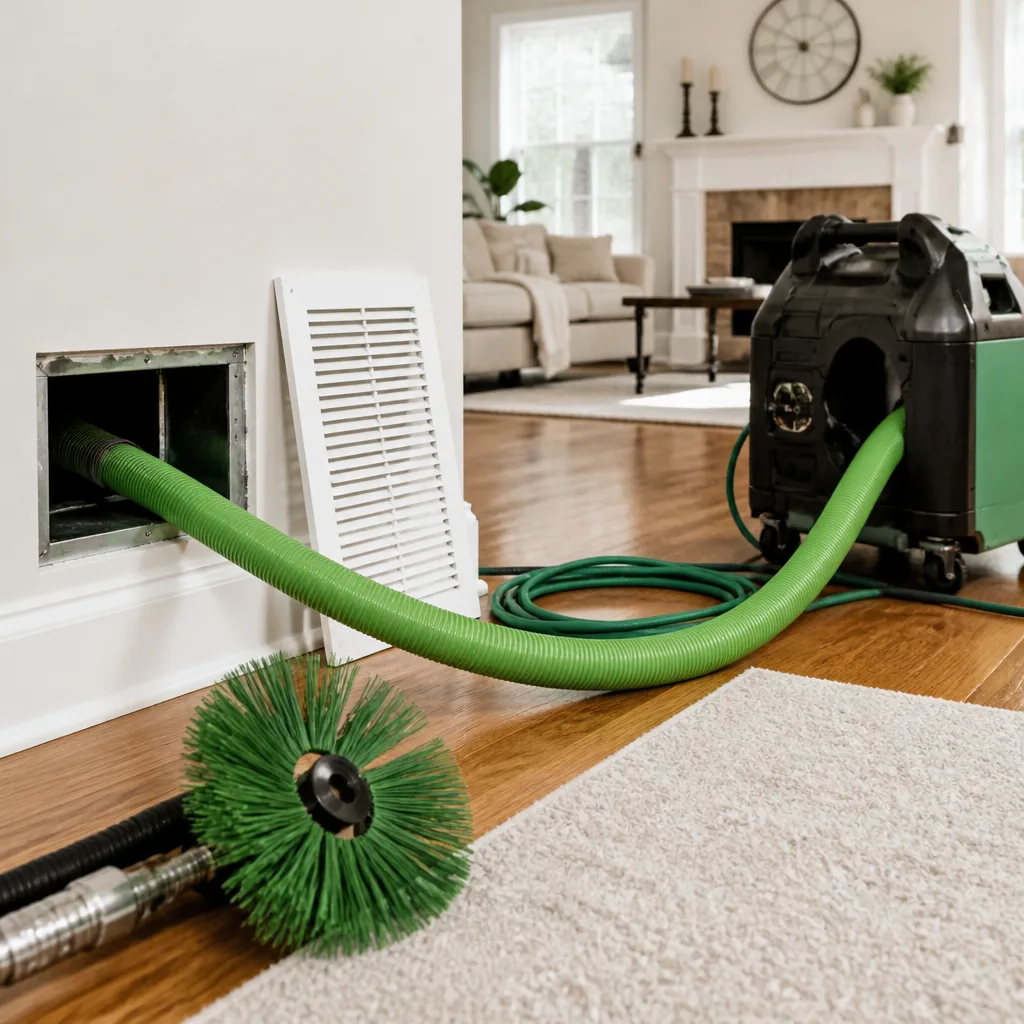 Whole-home duct cleaning
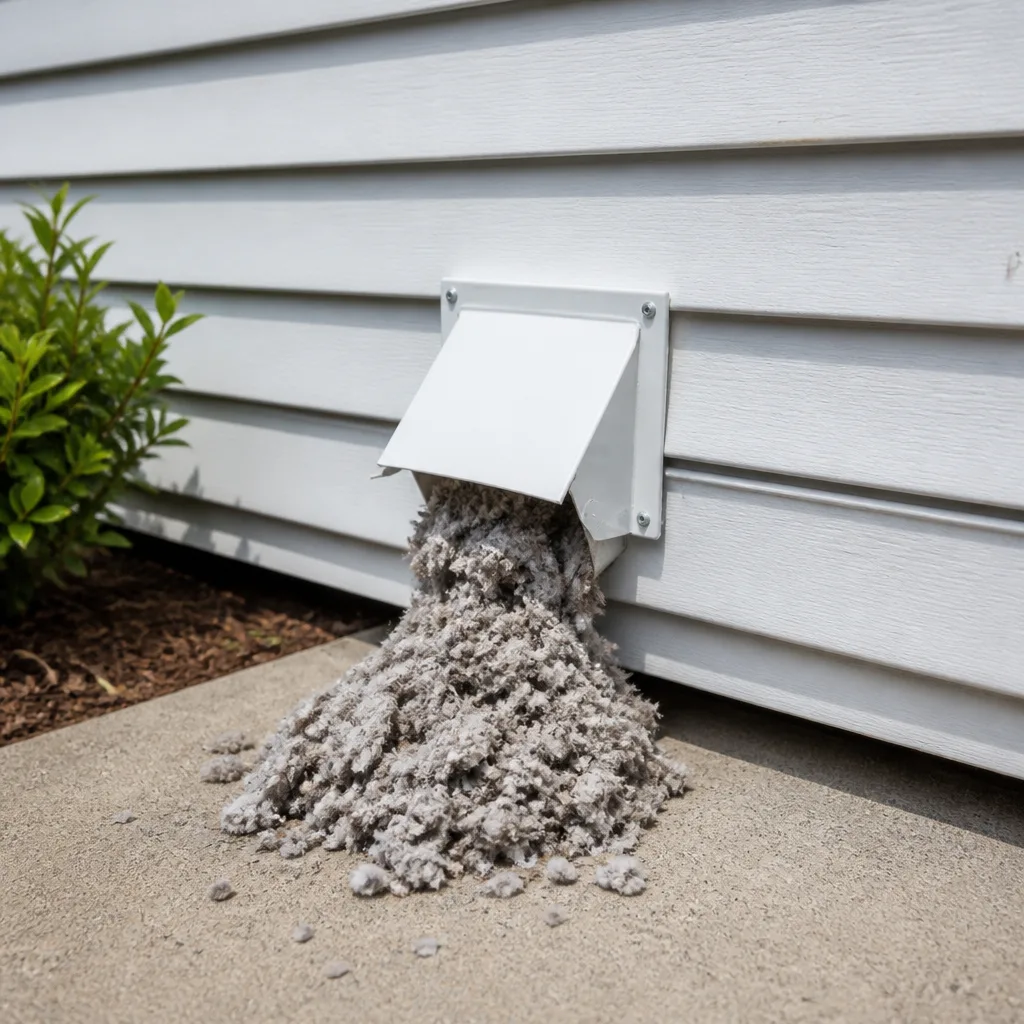 Dryer vent cleaning
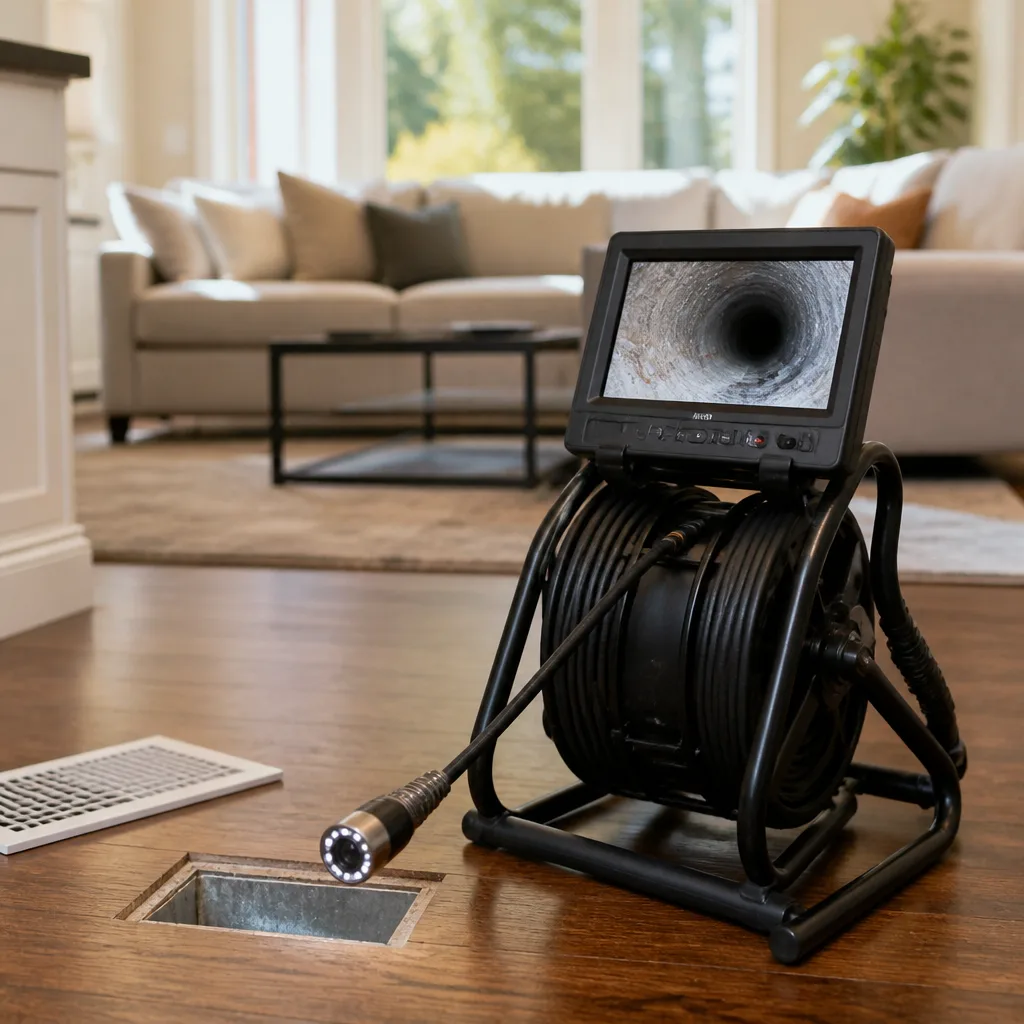 Camera inspection
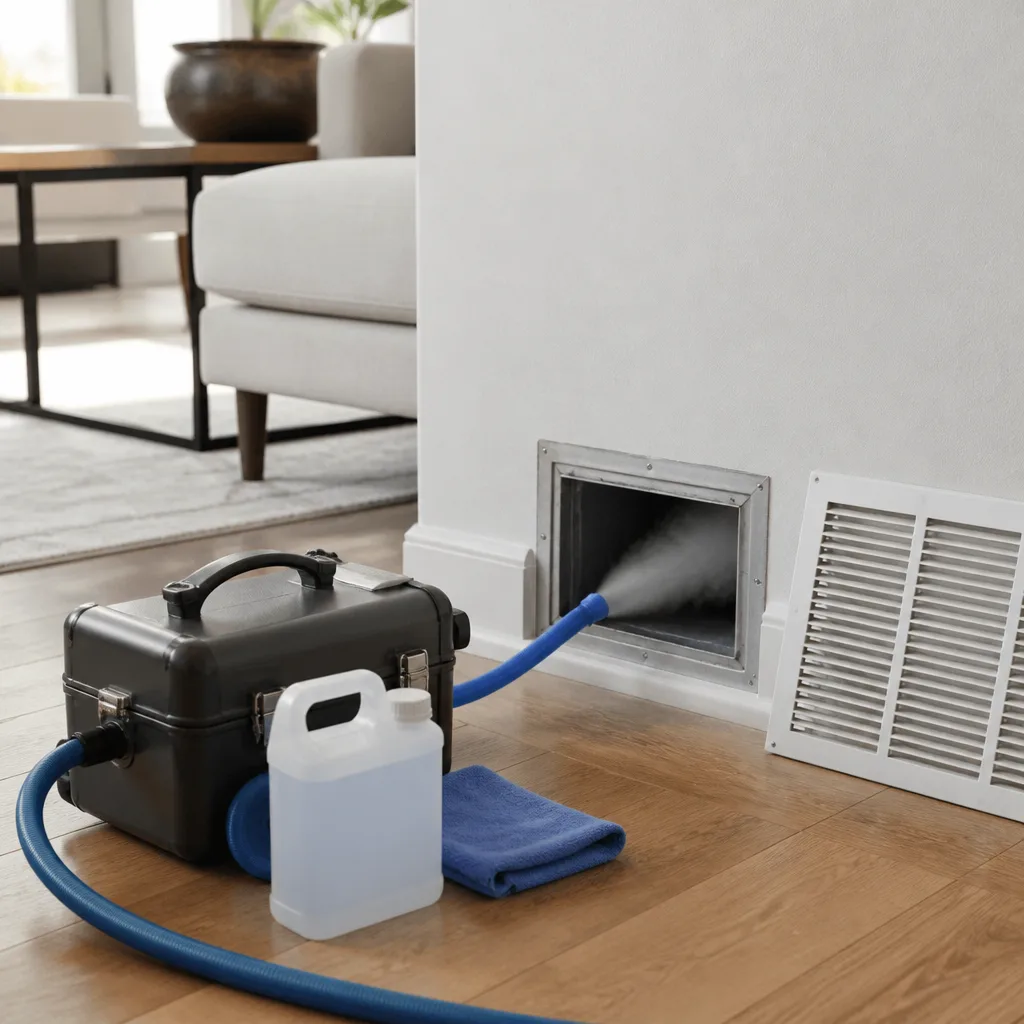 Sanitizing & deodorizing
Whole-system duct and dryer vent check with before-and-after photos - you see exactly what came out of your vents
That "$99 whole-house special" is a bait ad - the real number appears once they are in your hallway, or the "clean" is a shop-vac at the register. We photograph the inside of your ducts before and after instead.
How to Hire an Air Duct Cleaning Contractor in New Orleans: A Step-by-Step Guide
The lowest quote is usually the most expensive duct cleaning you’ll ever buy. That sounds backwards, but it’s the pattern we see again and again in New Orleans: a crew offers a whole-house cleaning for a price that couldn’t cover the fuel to get there, then spends the visit selling add-ons that were never part of the job. The industry here has a low barrier to entry and a high rate of incomplete work, which means the real skill isn’t finding someone who cleans ducts – it’s screening out the people who won’t. This guide gives you a technical screening process, not a list of questions to plug into Google. You’ll learn how to read certification, inspect equipment, decode a scope of work, and spot the warning signs that show up after every storm season.
Quick Answer
To hire an air duct cleaning contractor in New Orleans, verify NADCA membership and ACR certification, ask them to name their vacuum’s CFM rating and agitation tools before they arrive, insist on a written scope of work with line items rather than a flat “whole house” price, and confirm they use containment and HEPA filtration for any mold-positive system. A legitimate contractor will answer every one of those questions without hesitation. One who dodges them is telling you something important.
Styles & brands we work with
- Whole-home duct cleaning
- Dryer vent cleaning
- Camera inspection
- Sanitizing & deodorizing
Table of Contents
- Why the New Orleans Duct Cleaning Market Attracts Bad Actors
- Step 1: Verify NADCA Membership and ACR Certification
- Step 2: Know What Equipment a Real Contractor Arrives With
- Step 3: Watch for Post-Storm Contractor Surges
- Step 4: Read the Written Scope of Work Before You Sign
- Step 5: Ask About Containment and Sanitation
- Step 6: Find Out If They Can Actually Fix What They Find
Why the New Orleans Duct Cleaning Market Attracts Bad Actors
Duct cleaning has almost no entry requirements. In most states you don’t need a specialty license to clean ductwork, and in a market like New Orleans, where air conditioning runs hard for most of the year, the demand is constant and the customer base is huge. That combination is exactly what draws unqualified operators. They buy a shop vac, print a flyer, and start knocking on doors.
The trouble is that duct cleaning is also one of the easiest trades to fake. A homeowner can’t see inside the ducts. The technician spends an hour or two on site, hands over an invoice, and leaves. If the ducts were never actually cleaned, nothing visible will immediately contradict that. This information gap is the entire business model of the low-end operator. It’s also why a verbal promise that “we do a thorough job” is worth nothing on its own.
New Orleans adds its own wrinkle. The climate here is humid and warm for most of the year, which is good for dust mites and mold and bad for anyone with allergies or respiratory sensitivity. Many homes run their air systems nearly year-round, pulling air through the same ductwork day after day. When ducts collect debris, the system recirculates it through every room. Homeowners in areas like Mid-City and Gentilly often notice it as persistent dust on surfaces or a musty smell when the air kicks on. That’s the point where a thorough air duct cleaning matters, and it’s exactly the moment a slick operator wants to show up and charge you for a job they won’t complete.
The fix is to treat the hiring decision itself as the work. Instead of asking “are they cheap,” ask “can they prove what they’re doing.” The sections below walk through that in order.
Step 1: Verify NADCA Membership and ACR Certification
The National Air Duct Cleaners Association (NADCA) is the trade body that sets the recognized standard for duct cleaning work in the U.S. Its certification is called the ACR – Assessment, Cleaning, and Restoration. An ACR-certified contractor has been tested on the right method for evaluating ductwork, cleaning it, and restoring it after a problem, and is held to a documented standard of practice. That’s the baseline to look for.
Membership in NADCA matters because it carries obligations, not just a sticker. Members agree to a code of conduct, are expected to follow the ACR standard, and can be reported and reviewed if they don’t. That gives you recourse when a job goes wrong. A crew with no affiliation gives you nothing. If the contractor can’t tell you what NADCA even stands for, that’s a signal worth taking seriously.
Here’s how to verify without relying on a website badge:
- Ask for the contractor’s ACR certification status in writing – a reply by email, not a verbal yes on the phone.
- Check the NADCA member directory independently to confirm the name you were given is listed.
- Ask whether the person coming to your home personally holds the certification, or whether the company holds it and sends uncertified staff.
- Ask for the company’s physical business address and confirm it’s a real location, not a PO box or a rented mailbox.
- Ask for proof of insurance – general liability at minimum.
You don’t need to be suspicious during this conversation. A legitimate contractor expects these questions and should be able to answer them in a single email. Hesitation, vagueness, or an insistence that “we don’t need that” tells you what you need to know.
Step 2: Know What Equipment a Real Contractor Arrives With
Equipment is the most objective test there is. You don’t need to be an HVAC expert to know what a real job requires, because the tooling is visible and specific. A duct cleaning setup needs three things working together: a vacuum powerful enough to pull air and debris through the whole system, an agitation tool that physically loosens material from the duct walls, and a way to see what’s happening inside.
On the vacuum side, look for a truck-mounted or portable unit rated in CFM – cubic feet per minute. Ask for the number. A serious unit for whole-house work is rated high enough to create real negative pressure on the entire system while the technician works; a small shop vac with a hose can’t do that. On agitation, the standard is some form of rotary brush or compressed-air tool that reaches the full length of each branch. Wiping the first few inches of a register with a rag is not cleaning, and neither is blowing compressed air through a duct without capturing the debris.
Inside New Orleans Duct Cleaning, we run Rotobrush rotary brush systems combined with Nikro HEPA-rated vacuums. The rotary brush does the physical work of breaking debris off the duct walls; the HEPA vacuum captures it before it can recirculate into your air. For projects needing a higher capture standard, we bring Abatement Technologies air filtration equipment – the same class of machinery used in professional remediation projects. That’s two distinct steps, both done, every time: agitation and capture. One without the other is a half-job.
A camera system matters too. It lets the technician look down the line and confirm the ducts are actually clear before leaving. Ask whether they carry one and whether you’ll see the footage. Here’s what to look for in one place:
- CFM rating: confirm the number, not just that they “have a truck vacuum.”
- Agitation tool: rotary brush or comparable tool that reaches the full duct run.
- HEPA or equivalent capture: keeps dislodged debris from blowing back into the living space.
- Camera inspection: before and after, so the work is documented.
If a contractor can only tell you which brand of vacuum they own, that’s a sign they’ll clean what they can reach and call it done. What you want is a description of the process.
Step 3: Watch for Post-Storm Contractor Surges
New Orleans sees its share of severe weather, and after every major storm the number of duct cleaning crews working neighborhoods goes up. Some are legitimate. Some are out-of-state operators following the recovery money, some are local outfits who picked up duct cleaning as a side job, and some are running the classic low-price-then-upsell playbook. The pattern repeats after enough storms that locals learn to recognize it: door-to-door offers, coupon mailers, and flyers under windshield wipers, all with a price that seems too good to check.
That $49 whole-house offer is the oldest version of the scam. It buys a visit where the “technician” spends time pointing at things you can’t verify and quotes a much higher number for the actual work. Sometimes the work isn’t done at all. Here’s the checklist for spotting those crews before they get in the door:
- No physical address. A real business has a place you can visit or find on a map. An address that turns out to be a mailbox or a rental is a problem.
- No license or insurance proof. Ask. A real contractor has a certificate ready to send.
- Cash-only pricing. Straightforward businesses take cards and issue receipts. Cash-only protects the seller, not the buyer.
- High-pressure urgency. “Today only” pricing on a scheduled service is a sales tactic, not a real availability constraint.
- No written quote before work starts. The price should be in writing and agreed before anyone opens a register.
- No branding or vehicle marking. Not proof of a scam on its own, but combined with the above it’s a pattern.
Post-storm surges are worth watching for even when the weather has passed. Any time a neighborhood is being canvassed, ask the same five questions you’d ask a contractor you found through a referral. The answers will separate the two groups quickly.
Step 4: Read the Written Scope of Work Before You Sign
A professional quote is specific. A vague one hides things. Look for line items that say exactly what will be cleaned (supply and return runs, main trunk, registers, plenum), how many of each, what equipment will be used, whether the technician will perform a before-and-after camera inspection, and whether any sanitation treatment is included. If those things aren’t spelled out, ask why – they may not have been planned at all.
Here’s the difference in practice:
- Explicit: “Clean supply and return ductwork including 14 registers and 2 main trunks. Rotobrush agitation with HEPA capture. Before-and-after camera documentation. Written report provided.”
- Vague: “Whole-house duct cleaning.”
- Explicit: “$X for the duct system as described. Any additional work requires written approval before starting.”
- Vague: “$49 to start, price after inspection.”
The vague version isn’t a shortcut, it’s a contract outline with the important parts missing. If the scope doesn’t include a camera inspection or written report, expect the technician to clean what he can reach and invoice for the full house.
Read carefully for the phrase “as needed” or “at technician discretion” attached to any major line item. Those phrases convert a fixed scope into an open-ended one. You should also ask whether the quote is a fixed price for the described work or a per-register charge that changes with the count. Whole-system pricing is more predictable for you and is easy for the contractor to justify if the scope is clearly described.
Ask about the estimator’s role, too. If the person on the phone can’t explain what the quote covers, the person who shows up may not either. The New Orleans market has a lot of legitimate duct cleaning businesses whose written quotes are clear and complete – you don’t have to trade clarity for price.
Step 5: Ask About Containment and Sanitation
Duct cleaning that opens up a contaminated system without containment can spread more than it collects. Negative air pressure keeps spores and debris moving toward the vacuum instead of into the living room, and it’s the single step that separates a remediation-grade job from a well-intentioned scrub. Any contractor who can’t describe their containment setup isn’t doing it.
Before you book, ask these directly:
- “Do you establish negative pressure before you open anything?” Anything other than a yes is a no.
- “How do you contain the area around each register?” You want to hear about sealing or trapping at the register, not just “we’re careful.”
- “What’s your protocol for a system with visible mold?” A HEPA-rated capture standard; Abatement Technologies air filtration or equivalent; no fogging with a product that only masks the smell.
- “Do you sanitize, and is that in the written quote or an add-on?” Both answers are acceptable, but you should know which before they arrive.
- “What if you find mold during the job?” You want a protocol for stopping and confirming before proceeding, not a surprise line item.
Moisture is part of the picture in New Orleans. The humidity is high for most of the year, and if condensation collects inside ductwork, that’s where mold growth begins. A contractor who knows the trade will bring this up without prompting. If they haven’t asked about the condition of your ducts or any recent moisture problems, they’re working from a script, not from your home.
We handle mold-positive ductwork with the same two-step discipline as standard cleaning: physical agitation with the Rotobrush, then HEPA capture with Nikro equipment and Abatement Technologies filtration to keep everything contained. Treatment products are applied only after the system is clean and can be verified as clean. Dryer vent cleaning is often scheduled in the same visit, and the same containment discipline applies to lint removal.
Step 6: Find Out If They Can Actually Fix What They Find
One of the most common things we hear from New Orleans homeowners is that a previous contractor flagged a problem and couldn’t fix it. Disconnected duct sections in an attic or crawlspace, a torn flex duct behind a register, or a joint that’s been leaking air into the walls for years – those are all things a cleaning-focused contractor can find with a camera, and most cleaning-focused contractors will tell you so. Few can do anything about it.
Ask this question explicitly: “If you find a breach or a disconnect during cleaning, can you repair it before you leave, or will I need to hire someone else?” You want a straight answer, because a contractor who can’t repair will still provide value – you’ll know there’s a problem – but you should plan for a second visit. A contractor who can repair is the better call if you’re already suspicious about a problem area. Repairs made at the same appointment eliminate the risk of the ducts getting re-contaminated while you wait.
The trade-off of finding a repair-capable contractor, especially one who can also supply and install filtration systems from Honeywell or Aprilaire, is that you may need a slightly larger time window for the appointment. That’s normal. The trade-off of finding one who can’t is that you may wind up scheduling a second contractor and paying twice for access to the same duct run. Ask before you book, and put the answer in writing if the quote allows.
This is one area where a specialist pays off. A generalist HVAC company that offers duct cleaning as an add-on is unlikely to be carrying the tools to fix a flex-duct disconnect mid-clean. A dedicated specialist, working with New Orleans-area homes every week, will already know what typically fails in the local housing stock.
Common Mistakes to Avoid
- Hiring on price alone. A price that seems 70 percent lower than the rest isn’t a bargain; it’s a business model. That model relies on upselling during the visit, or on leaving most of the ductwork uncleaned.
- Accepting a phone quote without a written scope. Verbal pricing leaves you with no record of what was promised. Every legitimate quote should be written down.
- Letting a door-to-door crew into the house the same day. “We’re in the neighborhood today” is a sales tactic, not an emergency. Ask for the paperwork and check it before booking.
- Confusing a wiped register with a cleaned duct. The register is the easiest part to reach; the duct run behind it is what matters. Ask for camera footage.
- Not asking about containment. A vacuum without negative pressure and HEPA capture can spread debris into the living space. In a humid climate like New Orleans, that’s a real concern.
- Skipping the repair question. If the contractor finds a disconnected duct and can’t fix it, you’re not done – you’re halfway. Have a plan for the second call.
- Paying cash with no receipt. Even if you trust the person, the receipt is a record. Anything that makes you sign off without one blurs the paper trail if something goes wrong.
See the difference
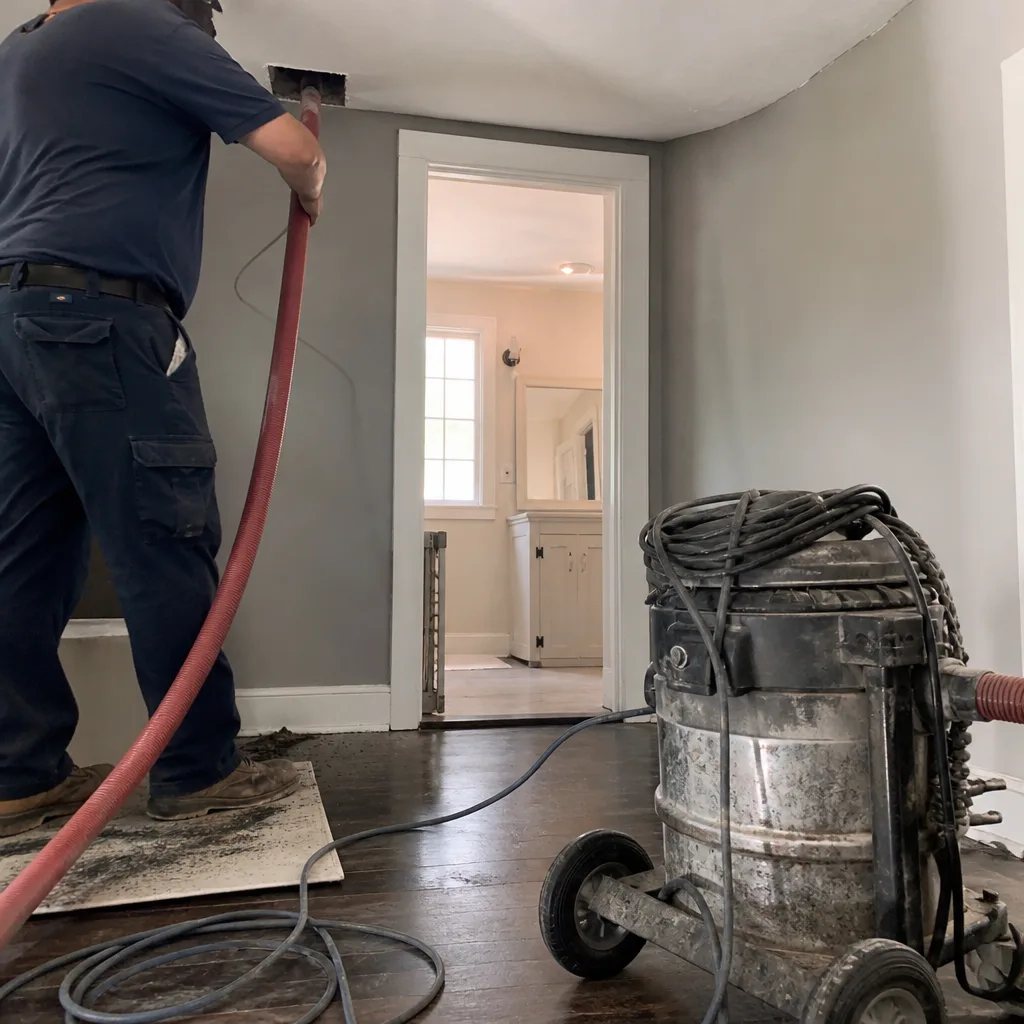 Before
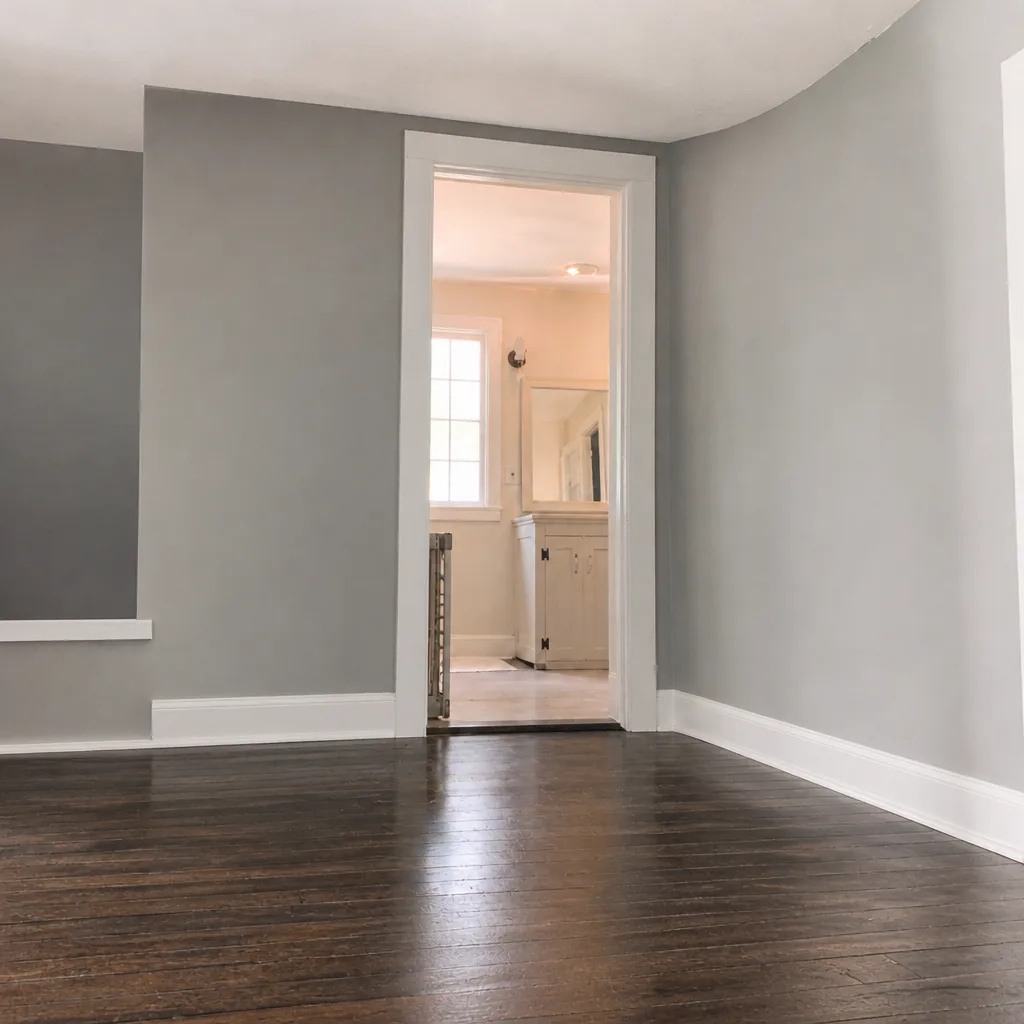 After
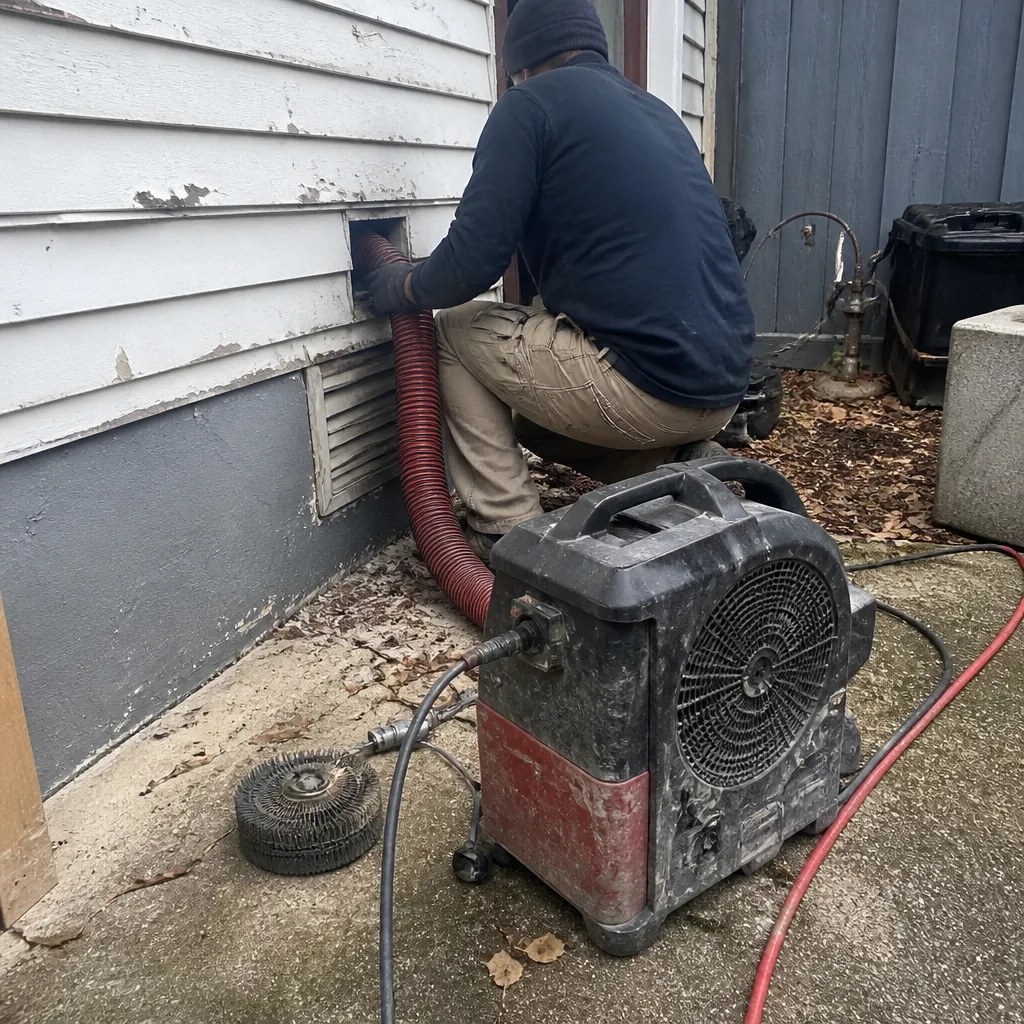 Before
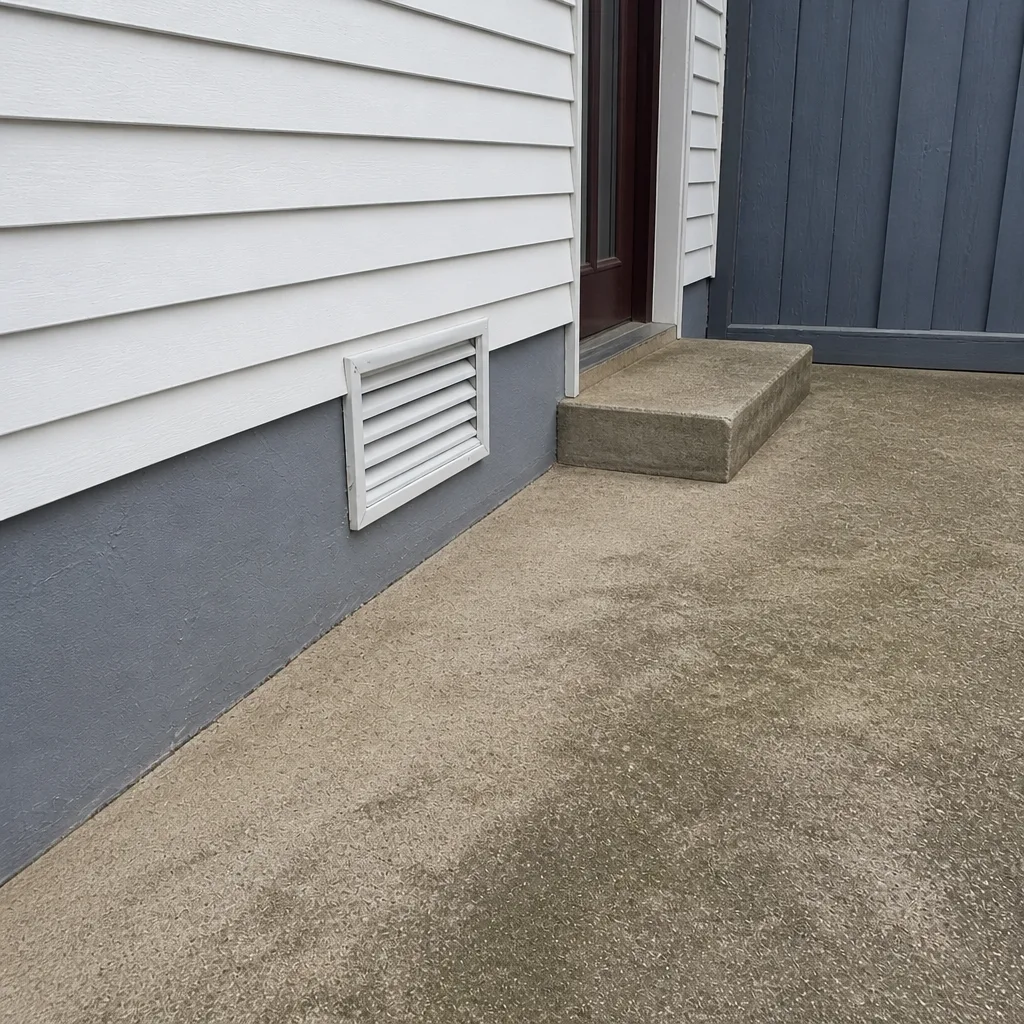 After
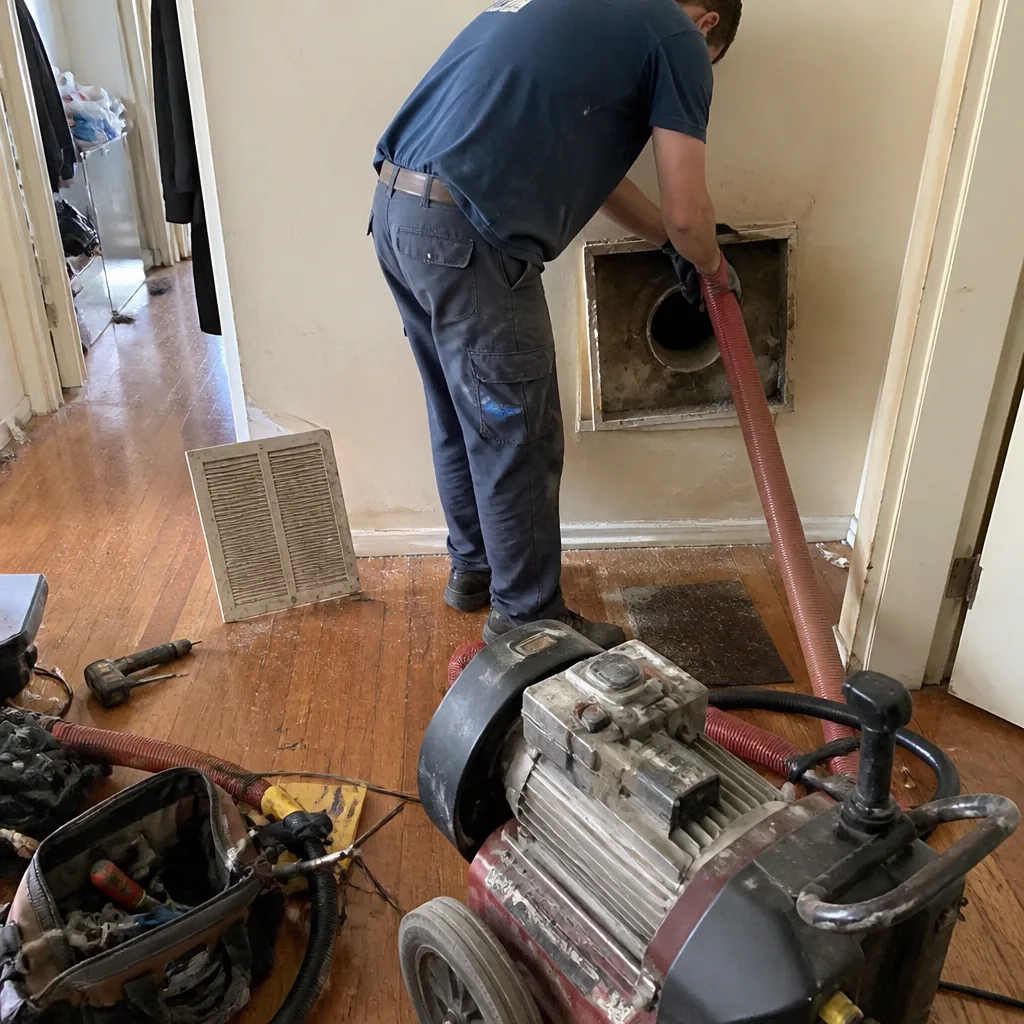 Before
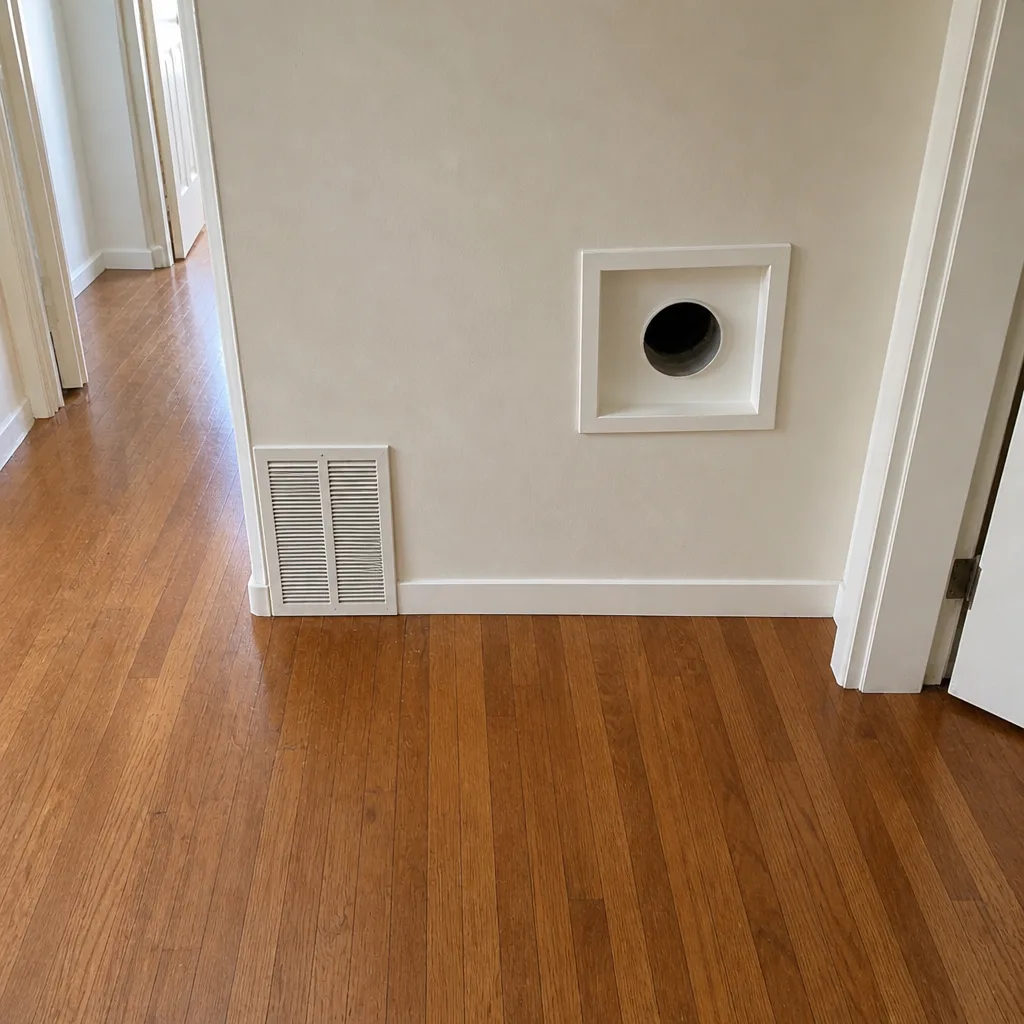 After
When to Call a Professional
Not every bit of dust is a duct problem, but some signs point clearly to the ductwork as the source. If every surface in a room gets a fresh film of dust within days of cleaning, if a musty odor appears only when the air conditioning runs, if allergy symptoms get worse indoors than outdoors, or if energy bills go up without a matching change in usage, the ducts are worth checking. Visible mold around a register, a flexible duct hanging loose in the attic, or a system that’s never been cleaned all warrant a professional assessment.
Property managers with documented air quality complaints from tenants should treat this as a scheduled maintenance item rather than an emergency call. New Orleans Duct Cleaning offers free estimates in New Orleans – call (833) 749-5104. We answer 24/7, and fast dispatch runs 7am to 7pm, Sunday through Friday. Our technicians have up to 14 years of experience and work with Rotobrush rotary brush systems, Nikro HEPA vacuums, and Abatement Technologies filtration equipment on every job.
Frequently Asked Questions
Most whole-house duct cleanings in the New Orleans area fall in the $300 – $600 range for a typical single-family home, with the exact number depending on the number of vents, the condition of the ducts, and whether a sanitation treatment is included. The written estimate is what sets the final price. Call (833) 749-5104 for a free estimate.
A quote that lands at a fraction of the rest typically doesn’t cover the same job: it’s either a teaser price that’s upsold on site, a partial cleaning of the easy-to-reach registers, or a crew without the equipment to do the full system. The low price is the sales mechanism, not a discount. Call (833) 749-5104 for a written estimate you can compare line by line.
Insist on before-and-after camera inspection footage and a written report with the invoice. If a contractor can’t provide either, you’re relying on their word. A legitimate contractor will offer both without being asked. Call (833) 749-5104 to discuss our documentation standard.
Most homes need it every three to five years, or sooner if you notice dust buildup, musty odors, mold, or recent renovation work. Homes near active construction, homes with pets, and homes with allergies often warrant a shorter interval. If you’re unsure, a camera inspection answers the question without guesswork. Call (833) 749-5104 to book a free estimate.
Look for a physical business address, verifiable NADCA membership and ACR certification, proof of insurance, and a written scope of work before any work begins. Post-storm, unlicensed crews are more common in New Orleans, and cash-only pricing without a receipt is a warning sign worth walking away from. Call (833) 749-5104 if you’d like to compare our process against anyone you’re considering.
Yes. We offer duct repair alongside cleaning, so a disconnected or torn duct discovered during the visit can be fixed in the same appointment rather than scheduled as a second job. Call (833) 749-5104 to describe what you’re seeing and we’ll tell you what the repair visit looks like.
The Bottom Line
Hiring an air duct cleaning contractor in New Orleans comes down to verifiable proof, not sales confidence. Ask for ACR certification and NADCA membership. Ask what CFM rating the vacuum carries and what agitation tool they use. Get a written scope of work with explicit line items, not a flat price. Confirm they establish negative pressure and use HEPA capture. And find out whether they can repair what they find. A contractor who answers all of those questions clearly is worth a slightly higher quote than one who can’t. The one who can’t isn’t saving you money – just moving it to a larger invoice later. New Orleans Duct Cleaning offers free estimates, follows the two-step agitation-and-capture process on every job, and can supply Honeywell and Aprilaire filtration systems or handle a duct repair on the same visit. Call (833) 749-5104. We answer 24/7. Fast dispatch from 7am to 7pm, Sunday through Friday.
Written by the team at New Orleans Duct Cleaning.