
Last updated November 15, 2026
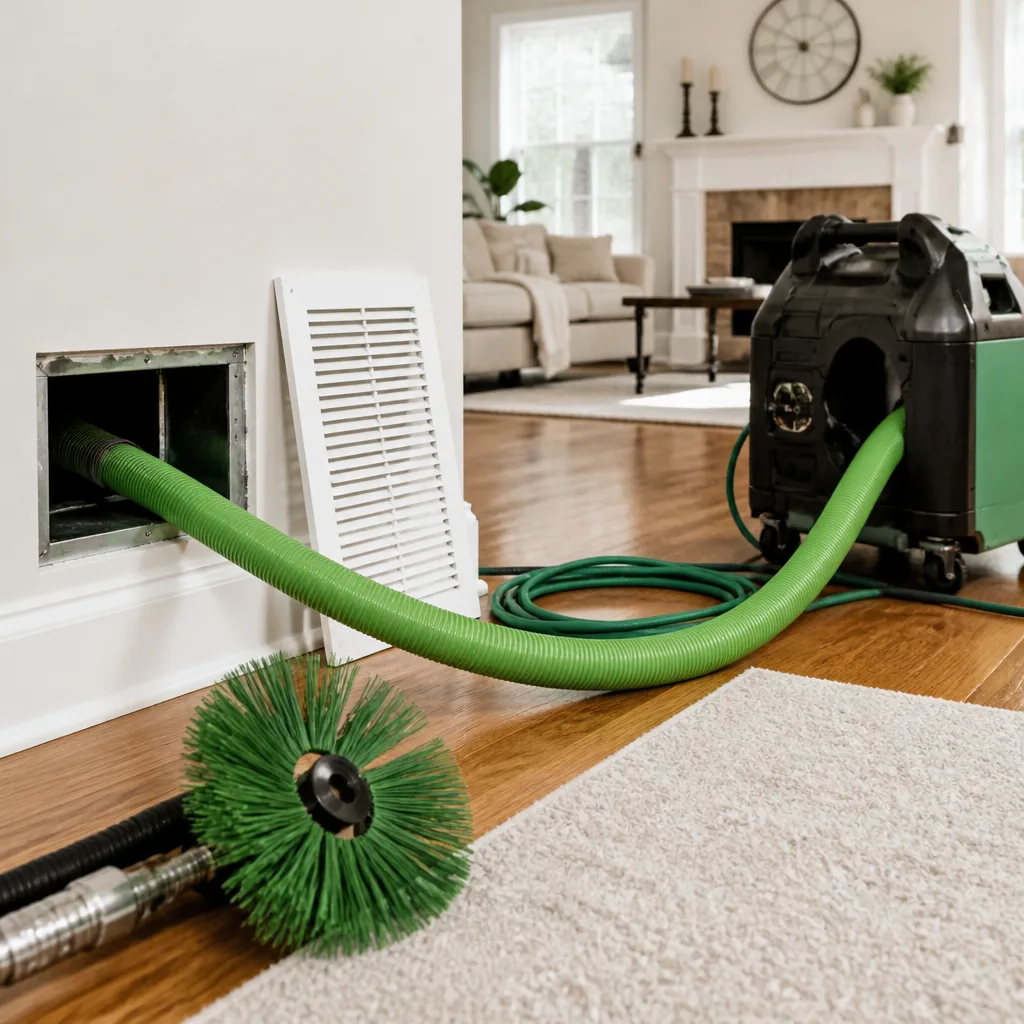 Whole-home duct cleaning
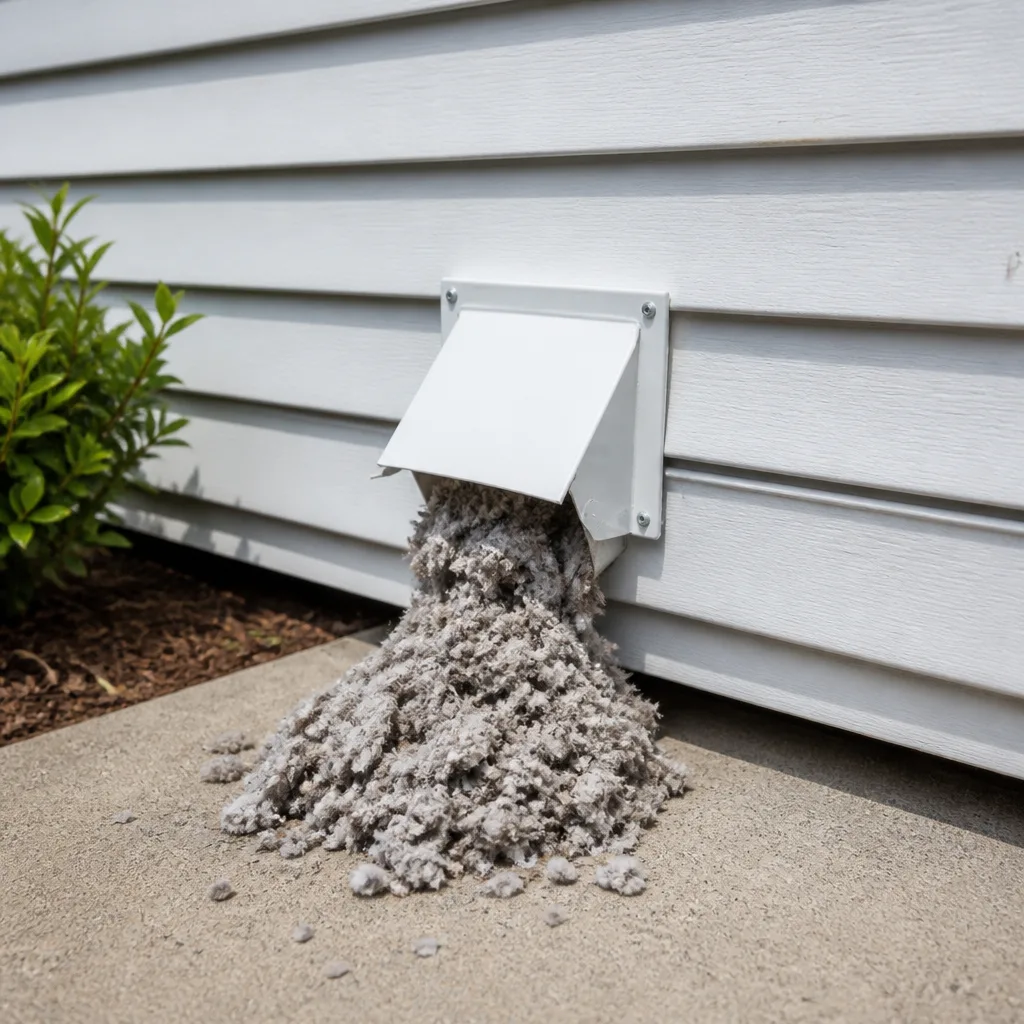 Dryer vent cleaning
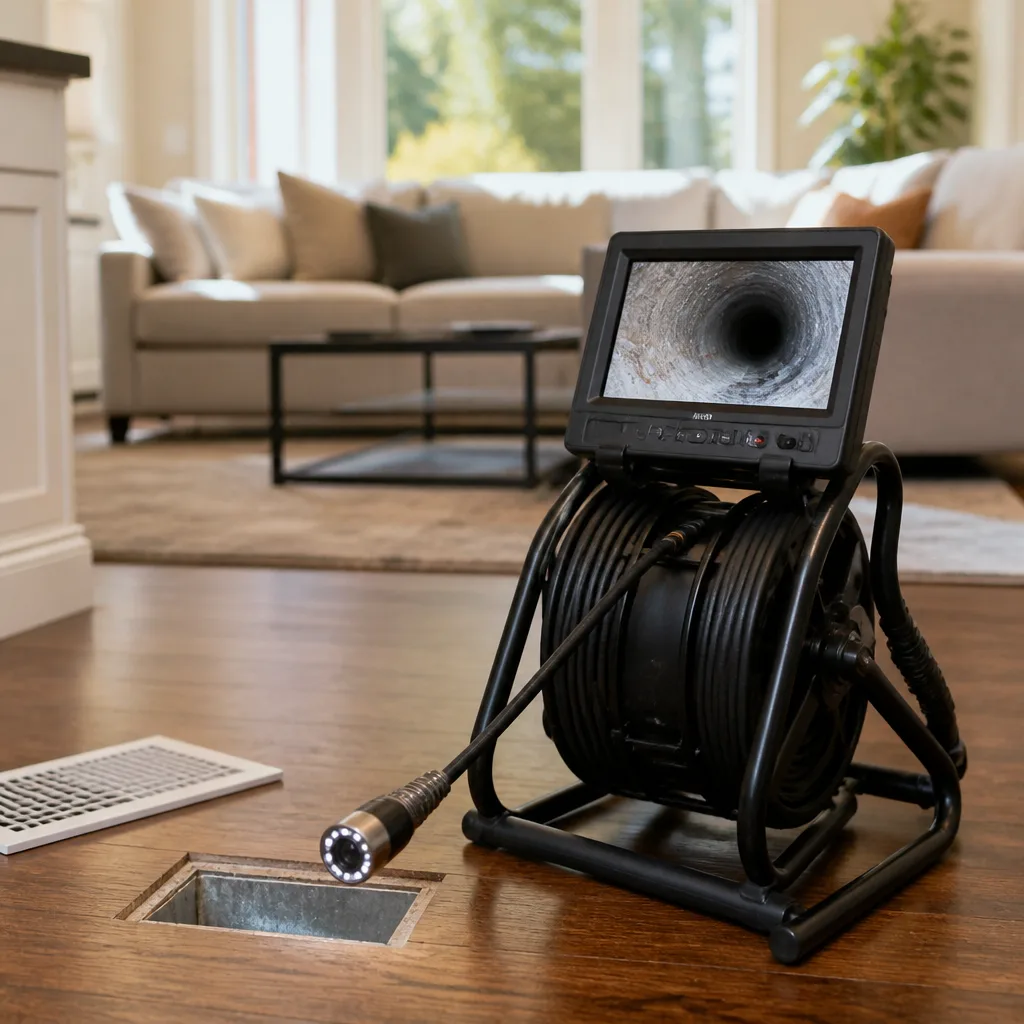 Camera inspection
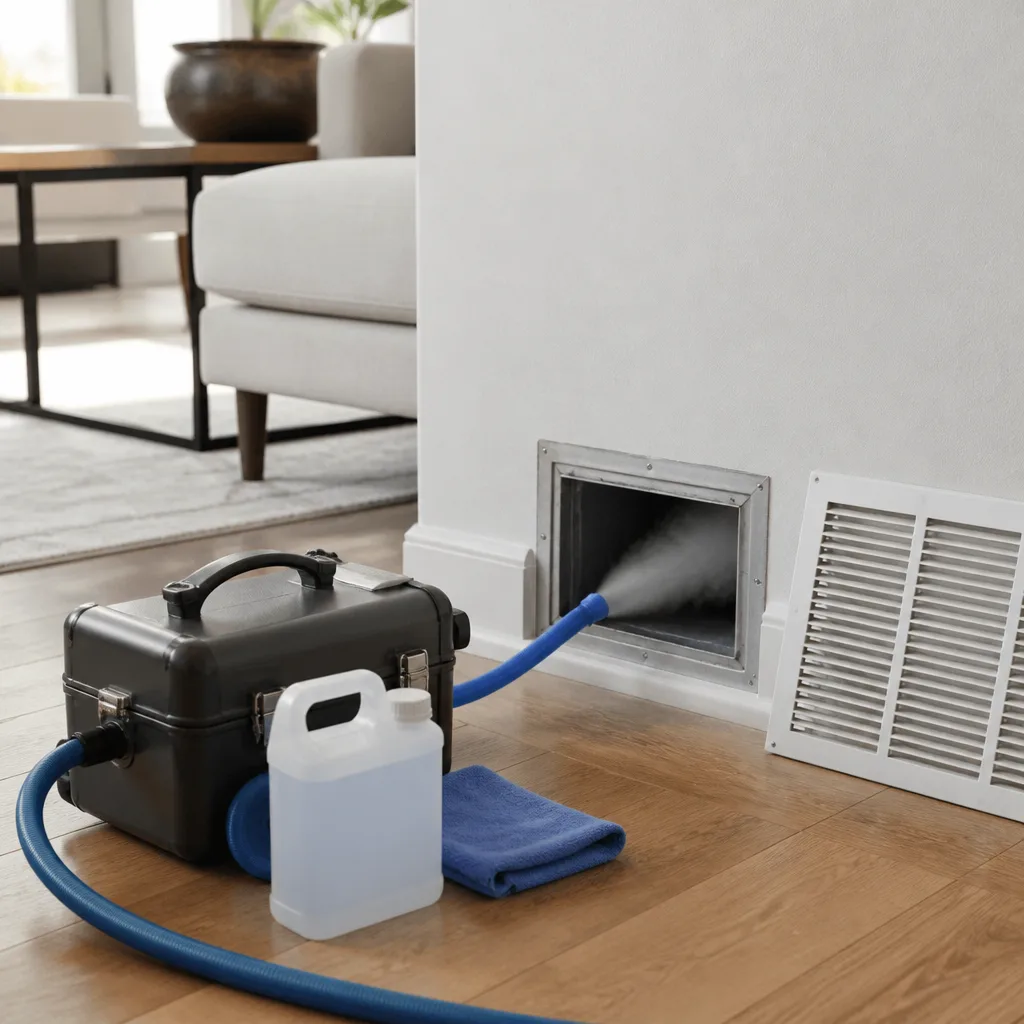 Sanitizing & deodorizing
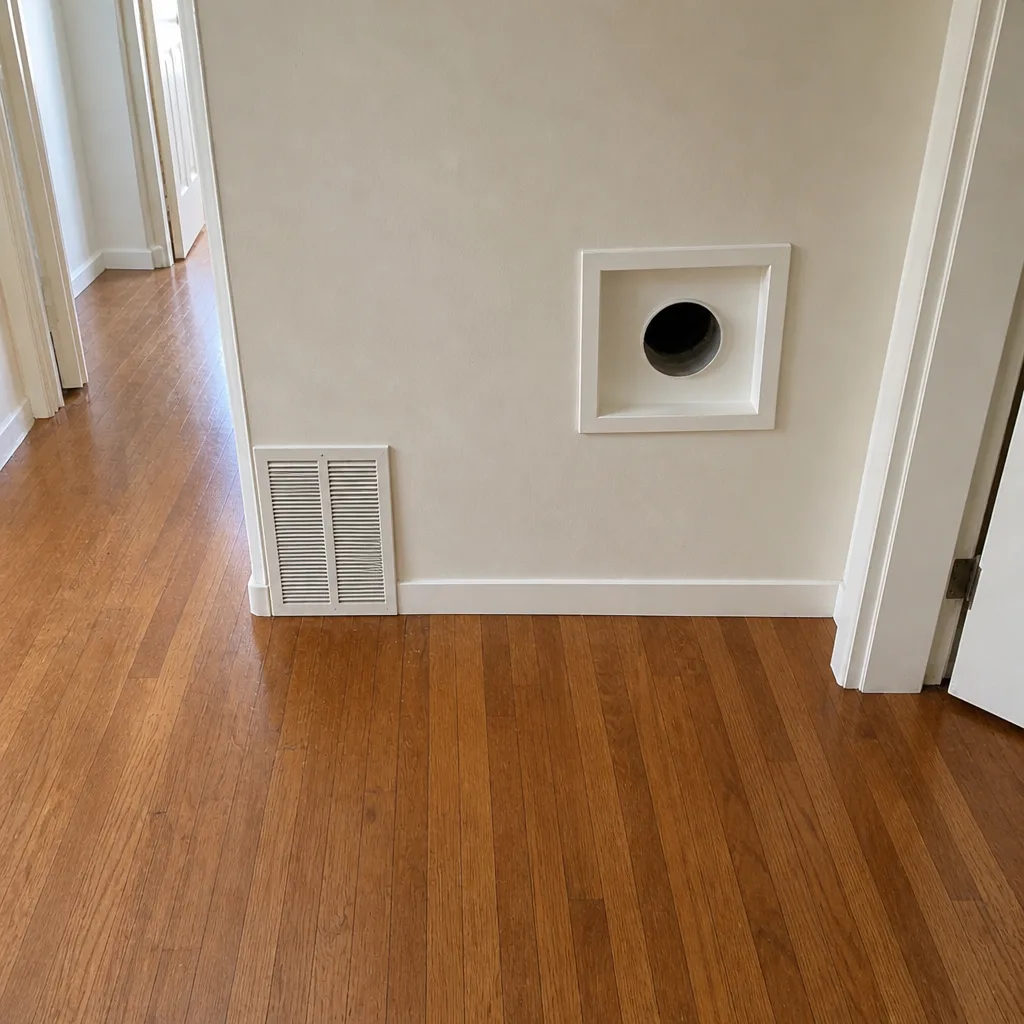
Whole-system duct and dryer vent check with before-and-after photos - you see exactly what came out of your vents
That "$99 whole-house special" is a bait ad - the real number appears once they are in your hallway, or the "clean" is a shop-vac at the register. We photograph the inside of your ducts before and after instead.
Air Duct Cleaning Warning Signs: A New Orleans Homeowner’s Reference Guide
A musty smell when the AC kicks on isn’t your imagination, and it isn’t the air outside. It’s microbial growth inside your duct system being pushed through every room at roughly 400 feet per minute. Most New Orleans homeowners blame the humidity, then the filter, then the thermostat before they ever suspect the ductwork itself. That order is backwards, and it’s why the same problem keeps coming back. This guide walks you through the specific signals a duct system sends long before it fails outright: the smells, the marks at your registers, the temperature swings, the bill creep, the symptom patterns, and the post-storm red flags. Read it once and you’ll know what you’re actually looking at.
Quick Answer
Air duct cleaning warning signs in New Orleans usually show up as a musty or dusty smell at startup, dark staining or particulate rings around supply registers, uneven room temperatures, rising energy bills, and allergy symptoms that track with HVAC runtime. Any single one of these is worth a professional inspection; two or three together usually means the ducts are holding debris and moisture deep inside the system, not at the surface you can reach.
Styles & brands we work with
- Whole-home duct cleaning
- Dryer vent cleaning
- Camera inspection
- Sanitizing & deodorizing
Table of Contents
- Smell-Based Warning Signs: Mold, Dust, and Rodent Odor
- Visible Signs at Your Registers
- Performance Warning Signs: Airflow, Bills, and Short-Cycling
- Health-Pattern Signals That Track HVAC Runtime
- Why New Orleans Humidity Makes Every Sign Worse
- Post-Storm Warning Signs: When to Stop Running the System
- What a Professional Duct Inspection Actually Covers
- Common Mistakes to Avoid
Smell-Based Warning Signs: Mold, Dust, and Rodent Odor
The nose is the fastest diagnostic tool you own, but only if you can tell the three common duct odors apart. They point to different problems, and each one calls for a different response. Train yourself to notice where and when the odor hits.
1. The musty, damp-basement smell
This is the classic mold odor. It’s earthy and slightly sweet, and it’s strongest in the first 30 seconds after the blower starts, then fades as your nose adapts. That fade is why people convince themselves it’s temporary. It usually isn’t. In ductwork, this smell points to microbial growth on the interior lining or on accumulated dust that has been damp long enough to support it. New Orleans summers keep interior duct surfaces in the ideal temperature and moisture band for growth, especially in flex runs and insulated trunk lines that sit in unconditioned attic space.
2. The dry, gray, gritty smell
Dust odor is different: it smells like an old furnace closet or a library basement. When you smell it at a register, dust has built up thick enough to be re-entrained every time air moves through. Expect this to go with visible dust rings at the vents and a filter that loads up faster than it used to.
3. The sharp, musky, unmistakable animal smell
Rodent odor is the one most people misread. It’s sharp and urine-like, often strongest in a specific room rather than the whole house. That’s usually because a rodent found a way in through a disconnected or breached duct in an attic or crawlspace and left droppings or nesting material inside the run. This is not a cleaning-only situation: a duct breach needs repair, and the contaminated section needs to be handled as such. Our technicians repair what other crews only report; we identify and fix breaches, disconnects, and deteriorated sections on the same visit.
Visible Signs at Your Registers
Go look at every supply register in your house. You’ll need a flashlight and clean hands. What’s on the grille and the surrounding sheetrock tells you a lot about what’s inside the duct behind it.
- Dark staining around the register: a faint shadow ring on the ceiling or wall where the grille meets the drywall. This is particulate-laden air escaping the seal. It means your register seal has failed, and it usually means the boot (the short duct piece behind the grille) has a gap. Gaps pull attic or wall cavity air into the airstream, which is the exact opposite of what you want.
- Particulate rings on the grille itself: a dark circle built up on the louver edges. This is dry dust stuck to the metal and is a strong indicator the duct interior is holding similar debris. Surface wiping removes the grille-side ring; it does nothing inside.
- Visible fluff or debris inside the vent opening: shine the light through the louvers at the first bend you can see. Loose fluff is common. What you don’t want to see is matted material, blackened spots, or anything that looks damp.
- Rust stains or water lines: red or brown streaks on or near the register point to condensation or a leak upstream. Fix the moisture source first, then address the duct interior. Cleaning wet ductwork without fixing the leak is wasted work.
- Pet hair or pest evidence at the grille: raccoons, rats, and even wasps find their way into attic duct systems through failed connections. Evidence at a bathroom or hall register near an exterior wall is worth investigating further.
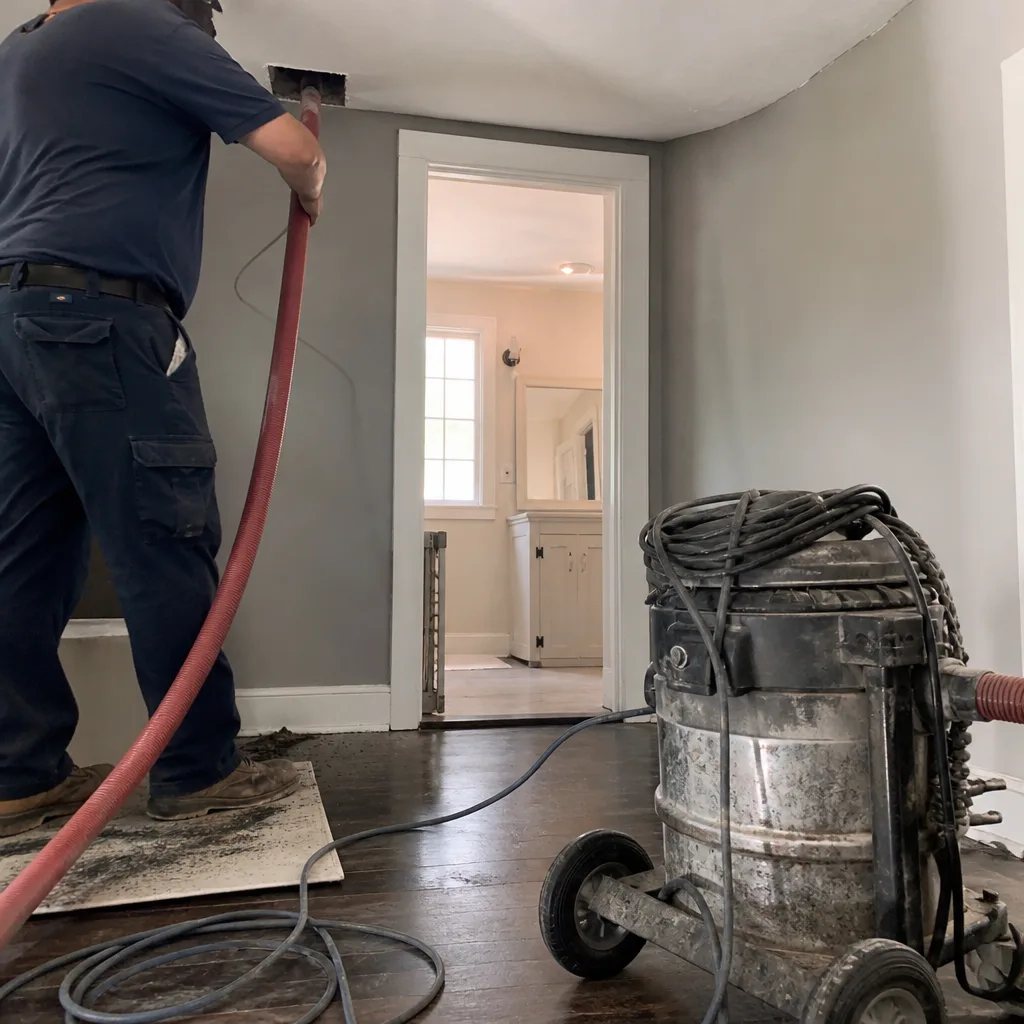
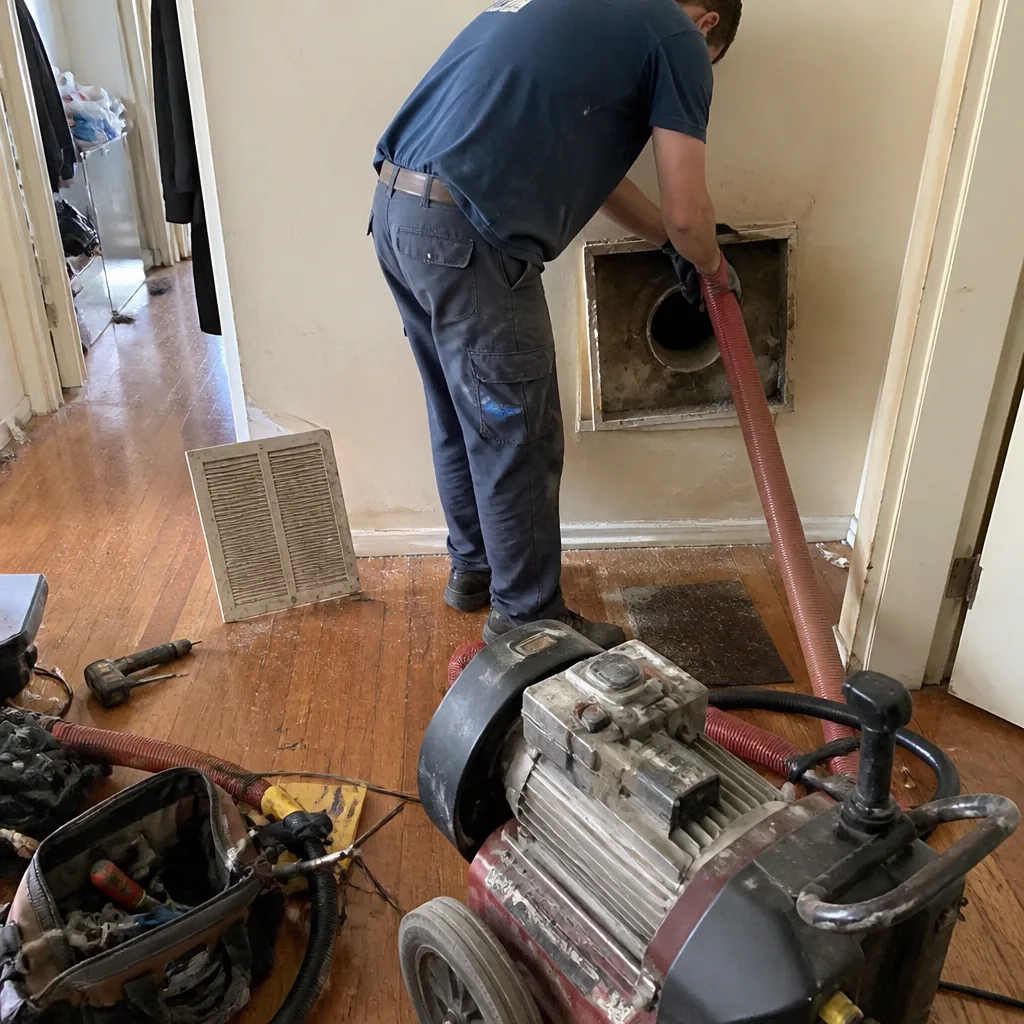
Professional-grade imaging tools can see around the first bend. If what’s visible at a register already worries you, the interior usually has more waiting. Our crews use air duct cleaning equipment that includes inspection before, during, and after the job, with before-and-after photos of your ducts.
Performance Warning Signs: Airflow, Bills, and Short-Cycling
Duct debris doesn’t just sit there. It reduces the effective cross-section of the duct, which changes the physics of the whole system. Homeowners usually spot this as a cluster of annoying problems, not one clear failure.
Uneven room temperatures
Every room should feel close to the thermostat setpoint when the system has been running for a while. If one bedroom runs 4-6 degrees warmer than the rest of the house, that register is seeing restricted airflow. In New Orleans homes, the most common culprits are blocked flex duct in the attic space, crushed runs behind drywall, and a supply boot that’s disconnected and dumping cool air into the attic.
Rising utility bills without an obvious cause
The system runs longer because it’s working harder to push the same volume of air through smaller openings. If your bills climbed 15-25% year over year with no rate change and no new appliances, compare the seasonal pattern to previous years. Long runtimes plus rising bills plus uneven temperatures is the classic trio pointing at airflow restriction from debris buildup.
Short-cycling and strange blower sounds
Restricted ducts can make a system trip limits: the blower runs, heat rises inside the equipment, the safety switch stops it, then it starts again a few minutes later. If you hear the blower coming on and off in short bursts, that’s worth a professional look. Likewise for a whistling sound at a register (high-velocity air squeezed through a small opening) or a rumbling rush at the return.
The thermostat guess-test
A simple field check: drop the thermostat 3 degrees and go stand at the register in each room. Airflow should be strong and steady everywhere. Faint airflow, weak airflow in some rooms, or a register that feels barely on when the rest is blowing hard is a warning sign that points to the duct side of the system.
Health-Pattern Signals That Track HVAC Runtime
This section is about your observations, not medical advice. Document the pattern and share it with the professional you hire so the inspection can target what you’ve noticed.
The clinical pattern worth documenting is a run of symptoms that clusters around HVAC activity. Look for these specific patterns:
- Morning and evening correlation: symptoms that are worse within the first hour the system kicks on, and again when it kicks on in the evening after the house has been closed all day.
- Room-specific correlation: symptoms most noticeable in the bedroom whose register had the dark staining or the musty smell.
- Seasonal onset: new or newly worse symptoms in the first weeks of air conditioning season, when the system first starts moving air through the closed-house ductwork.
- Improvement when away: symptoms that ease within hours or a day of being in a different building, then return within a day of coming home.
- Multiple household members: the same symptoms showing up in more than one family member in the same weeks. That’s a signal about the home, not an individual.
Write down what you notice for a week or two. A pattern is more useful to a technician than a one-time complaint. Bring it to a medical professional for the health questions and to a duct professional for the duct questions; those are two separate calls, and neither replaces the other.
Why New Orleans Humidity Makes Every Sign Worse
Ductwork doesn’t exist in isolation. The air that surrounds it does, and in New Orleans the air around a duct run is often a hot, humid attic or a damp crawlspace. Two things happen that homeowners in dry climates don’t see the same way.
Condensation on cool duct surfaces
Cooled air inside a duct keeps the duct surface below the dew point of the surrounding attic air for much of the cooling season. Anywhere the insulation has fallen off, been torn during another contractor’s work, or was never installed correctly, moisture collects on the duct. Damp dust is the perfect substrate for microbial growth. That’s the musty smell from before, and it’s why a surface-only cleaning in a hot attic setting doesn’t stay clean for long.
The closed-house effect
In a mild winter, windows stay closed for weeks while the heating or cooling still runs. In summer, of course, nobody opens the windows. Whatever sits in the ductwork gets circulated and recirculated, and fresh outdoor air rarely dilutes it. This is one reason duct cleaning is not a luxury item in New Orleans; the home’s only “fresh” air for months on end comes through the filter and the duct return.
Post-hurricane-season attic moisture
After a major storm, attics that took on rain or wind-driven moisture hold it long after the ceilings dry. Ducts running through those attics stay in a high-humidity environment for weeks. Any breach is now an entry point for damp air, insulation fibers, and biological growth. This is the point where “just humidity” turns into a duct problem.
Post-Storm Warning Signs: When to Stop Running the System
After a named storm, a fast-moving summer thunderstorm, or any event that pushed water or wind into the attic or crawlspace, the duct system needs to be inspected before the next cooling cycle. Some conditions require shutting the system down entirely until a professional looks at it.
Stop running the system if you notice any of the following
- Visible water inside a duct or dripping from a ceiling register. Running the blower spreads moisture through the whole system and gives mold a head start.
- Insulation fibers everywhere at a register, or a collapsed duct visibly resting on the attic floor. Running the system can push fiber and dust into the living space.
- A disconnected trunk or supply boot dumping air into the attic. This pulls attic contaminants into the system through the return pathway and can also stress the equipment.
- A definite burnt, electrical, or wire-insulation smell. That’s not a duct cleaning problem, that’s an equipment and electrical issue. Shut down and call the appropriate trade.
- Any obvious pest intrusion with a torn duct connection. Rodent-contaminated ductwork should be handled as contaminated, not simply vacuumed with a shop vac.
If the ceiling or attic stayed dry and nothing looks disturbed, running the system is usually fine while you wait for an inspection. If the duct bath was real, call before you spend another day cooling a contaminated house. Professional-grade equipment plus HEPA-rated filtration captures the dislodged material rather than blowing it into your living space; that matters far more after a storm than on a routine cleaning.
What a Professional Duct Inspection Actually Covers
You should know what you’re paying for before anyone unloads equipment. A thorough inspection in a New Orleans home usually covers the following, and if a crew skips several of these, ask why.
- Return-side inspection: the largest duct surfaces by square footage are often on the return side. A crew that only looks at supply runs has skipped half the system.
- Attic and crawlspace walkthrough: every accessible run, looking for disconnects, crushed flex duct, missing insulation, and pest entry points.
- Interior imaging of the duct: mirror or camera inspection past the register bend to see the actual interior, not the grille.
- Register and boot condition check: staining, seal integrity, and gaps at the boot-to-drywall joint.
- Filter and air handler compartment check: the return plenum and filter rack area are prime collection points for debris that has been pulled through.
- Moisture source identification: any sign of condensation, leaks, or damp insulation is called out so it can be repaired properly, not just cleaned around.
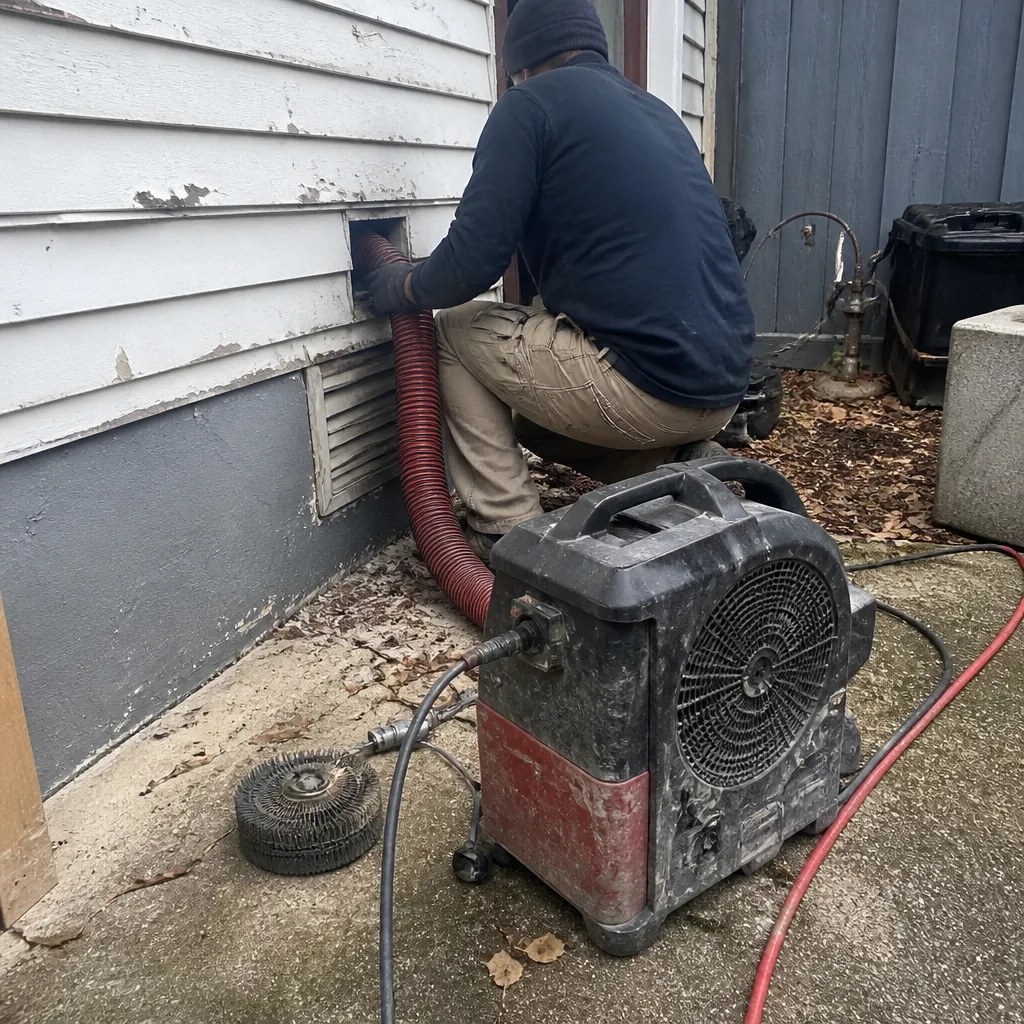
Once the inspection is done, we recommend professional-grade rotary brush agitation followed by HEPA-rated capture for every run. That two-step process is what separates real cleaning from wiping the grille. The brush loosens the bonded material on the duct interior; the vacuum (ours is Nikro HEPA-rated) captures it. One step without the other leaves the debris in the system. Our crews pair a Rotobrush rotary brush with the Nikro HEPA vacuum on the same job, and use Abatement Technologies filtration equipment for the airborne material that gets stirred up in the process, the same class of machinery used on professional remediation projects. We also supply and install Honeywell and Aprilaire whole-home air quality products, so a filtration upgrade can happen at the same appointment rather than requiring a second contractor.
Where the inspection finds a breach or a disconnected run, cleaning alone won’t fix it. That’s a repair, and we handle it as part of the same job. We also include Guardsman-grade protective products in the service to help ducts stay cleaner longer after the work is done. If you have multiple indoor air items on your list, a dedicated dryer vent cleaning is worth scheduling alongside the duct work, since lint buildup in the dryer vent is a leading cause of residential fires and the same visit can cover it.
Common Mistakes to Avoid
- Wiping the grille and calling it done. A clean grille doesn’t mean clean ducts. The debris lives past the first bend, and the surface wipe does nothing to the interior where air actually travels.
- Assuming the filter is doing the ductwork’s job. Filters catch what reaches them. A high-MERV filter improves the air handler’s intake, but it doesn’t remove what’s already stuck to the duct walls from years of accumulation.
- Blaming the AC equipment for a duct problem. New Orleans homeowners sometimes spend real money on a system replacement before anyone inspects the ducts. Uneven temperatures and high bills often trace to duct restriction, not the outdoor unit.
- Running the system after a wet-duct event. If a supply duct took on water after a storm, running the blower recirculates moisture through the whole system and gives mold weeks of head start before anyone notices.
- Hiring a crew that only blows air. A compressed-air-only cleaning with no rotary agitation and no HEPA capture stirs up contaminants and leaves them in the system. Ask what equipment is being used, specifically, before you book.
- Skipping the repair step. A crew that reports a breach but can’t fix it leaves you with a clean duct system that will be dirty again in a few months. Repair belongs on the same job.
- Treating a musty smell as seasonal. In a New Orleans summer, the interior of an attic duct system stays in the mold-friendly band for months. A smell that shows up every May and disappears every November is telling you something the season won’t fix.
See the difference
 Before
 After
 Before
 After
 Before
 After
When to Call a Professional
Call us when any of the following is true: you’ve got a consistent musty smell at startup that no filter change fixes; you see dark staining or particulate rings at more than one register; one or more rooms won’t hold temperature; your bills climbed without an obvious cause; a household pattern of symptoms tracks HVAC runtime; a storm pushed water or wind into the attic; or you aren’t sure what you’re looking at and want an inspection you can trust. Call sooner rather than later on a rodent smell or a water event, since both escalate. New Orleans Duct Cleaning offers free estimates in New Orleans. Call (833) 749-5104. We answer 24/7. Fast dispatch from 7am to 7pm, Sunday through Friday, closed Saturday. Our technicians have up to 14 years of experience, we’re licensed and insured, and you get one flat price per system agreed before work starts, plus before-and-after photos of your own ducts.
Frequently Asked Questions
You need cleaning if you have one or more of the following: a musty or rodent smell at startup, visible dark staining or particulate rings at registers, uneven room temperatures, rising energy bills, or a symptom pattern that tracks HVAC runtime. A visual inspection with a flashlight at every register is the fastest first check. If you’d rather skip the guesswork, call (833) 749-5104 for a free estimate.
Mold odor in ducts is earthy and slightly sweet, strongest in the first 30 seconds after the blower starts, then fading as your nose adapts. Dust odor smells dry and gray, like an old furnace closet, and it’s usually strongest whenever the system is running. Rodent odor is sharp and urine-like and often concentrated in one room. Each points to a different corrective response, so the distinction is worth getting right before you book.
In our experience, it’s usually the ducts. High outdoor humidity alone doesn’t create a smell inside a closed house; the smell comes from microbial growth on damp dust inside the duct system, and once it’s there, every cooling cycle distributes it. If the odor disappears when the system is off and returns when it starts, that’s the duct signature, not the outdoor air. Call (833) 749-5104 for an exact quote; estimates are free.
Two common reasons: the first cleaning was surface-level (wiped grilles and maybe a compressed-air pass, no rotary agitation or HEPA capture), or a duct breach or condensation source was never repaired, so the system keeps getting damp and re-contaminating itself. Cleaning without fixing the underlying moisture or breach is a temporary fix. Our crews repair what other crews only report, which is why a proper inspection comes first.
Stop running the system if you see water inside a duct, insulation fibers at a register, a collapsed or disconnected duct, or a burnt or electrical smell. If the attic stayed dry and nothing looks disturbed, running it while you wait for inspection is usually fine. If you’re unsure, shut down the system and call us at (833) 749-5104 to schedule an inspection.
Cleaning handles accumulated debris in intact ductwork; repair handles breaches, disconnects, crushed runs, or degraded duct sections. Many New Orleans homes need both on the same visit, especially after years of humidity exposure. The only way to know is an inspection. We handle cleaning and repair in one appointment so you aren’t left with a clean-but-compromised system. Call (833) 749-5104 for a free estimate and we’ll walk you through what the inspection finds.
The Bottom Line
Duct warning signs are readable if you know what to look for: musty, dusty, or animal smells at startup; dark staining and particulate rings at registers; uneven temperatures, rising bills, and short-cycling; symptoms that track HVAC runtime; and any post-storm water or wind event. New Orleans humidity makes each of these worse and harder to ignore. The response is the same across all of them: inspect the system properly, agitate the interior with a rotary brush, capture the debris with HEPA-rated equipment, repair any breach on the same visit, and confirm the result with before-and-after photos. If you’ve been treating a duct problem as “just humidity,” that’s the warning to act on. Call (833) 749-5104 for a free estimate. We answer 24/7. Fast dispatch from 7am to 7pm, Sunday through Friday, closed Saturday.
Written by the team at New Orleans Duct Cleaning.