
Last updated November 15, 2026
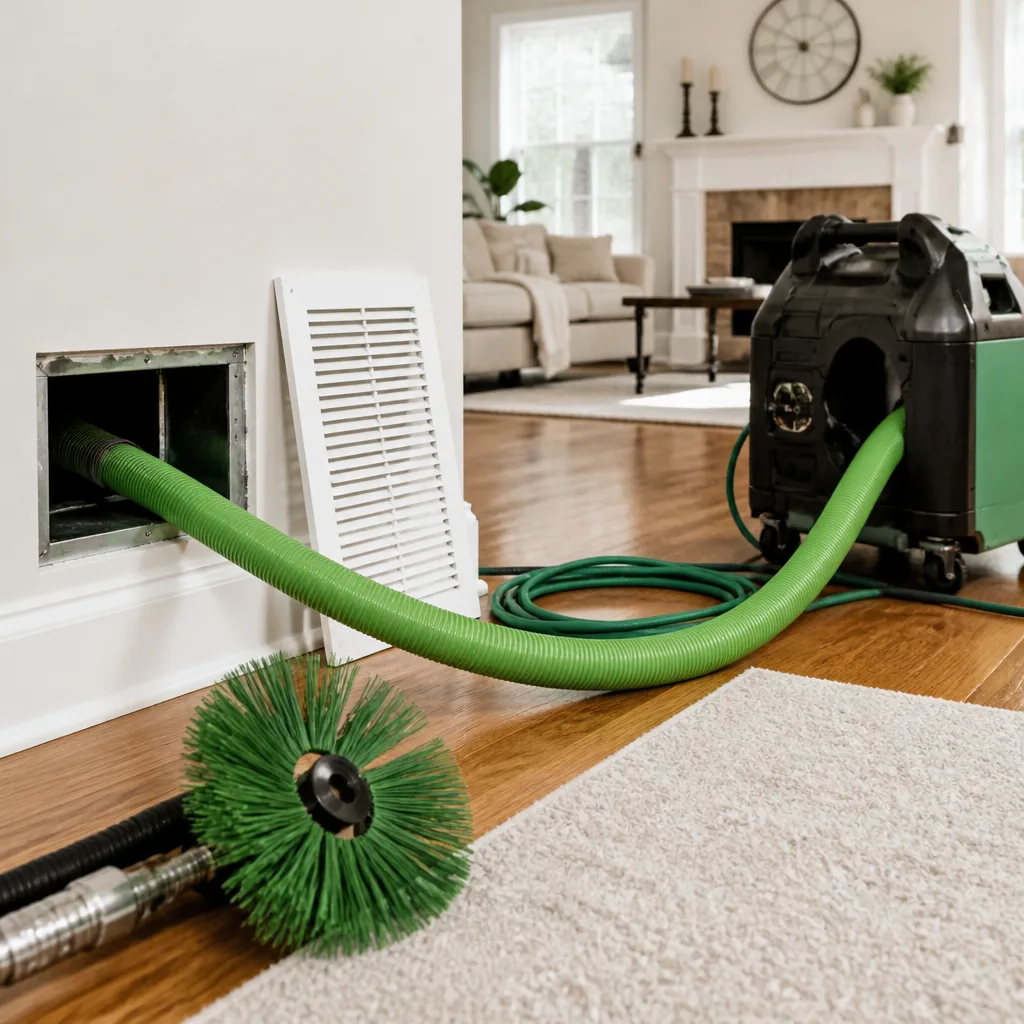 Whole-home duct cleaning
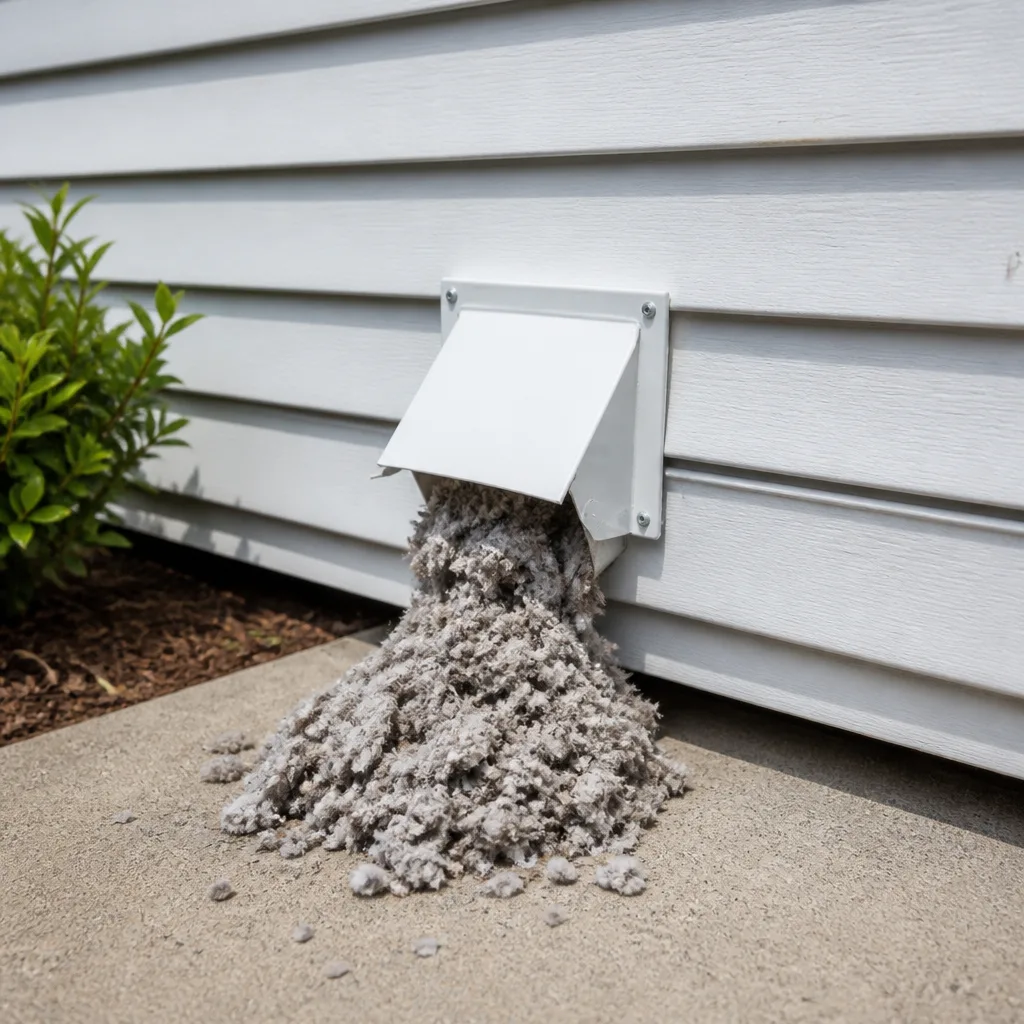 Dryer vent cleaning
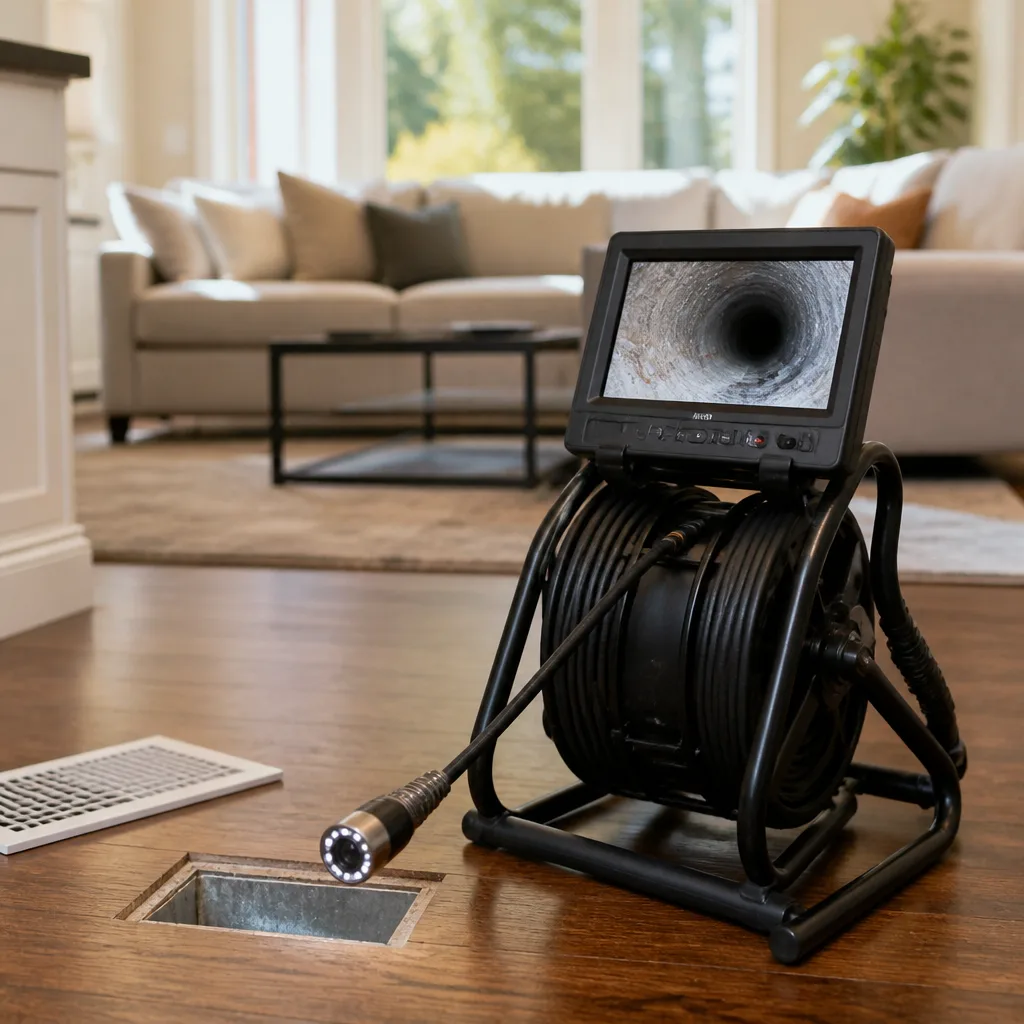 Camera inspection
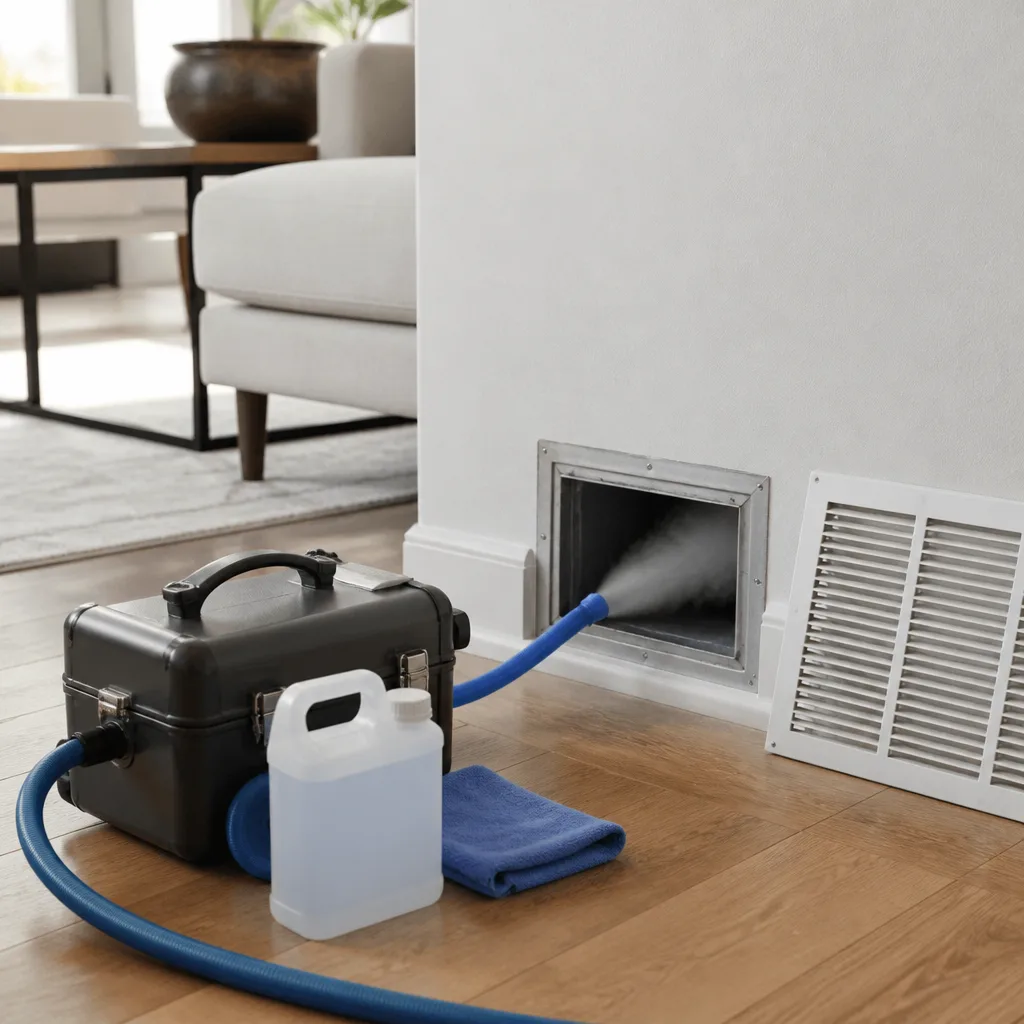 Sanitizing & deodorizing
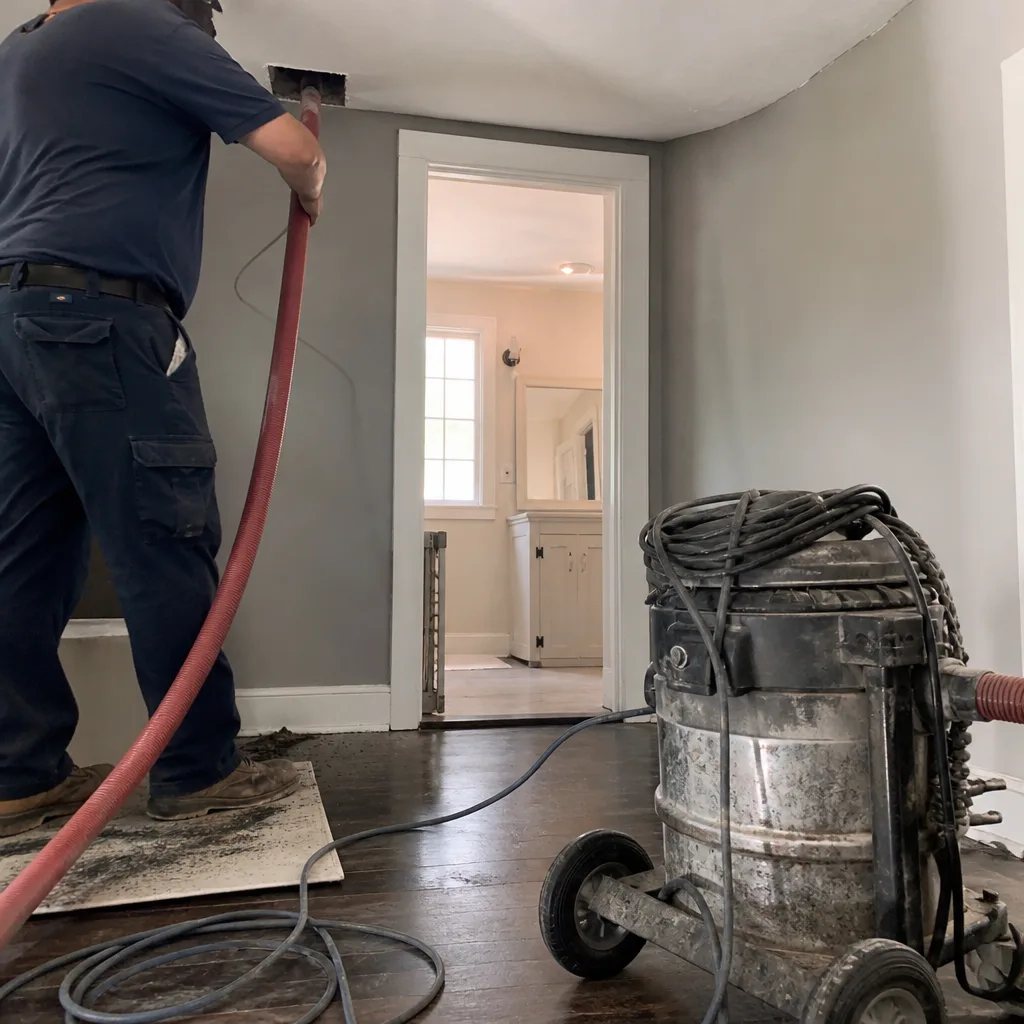
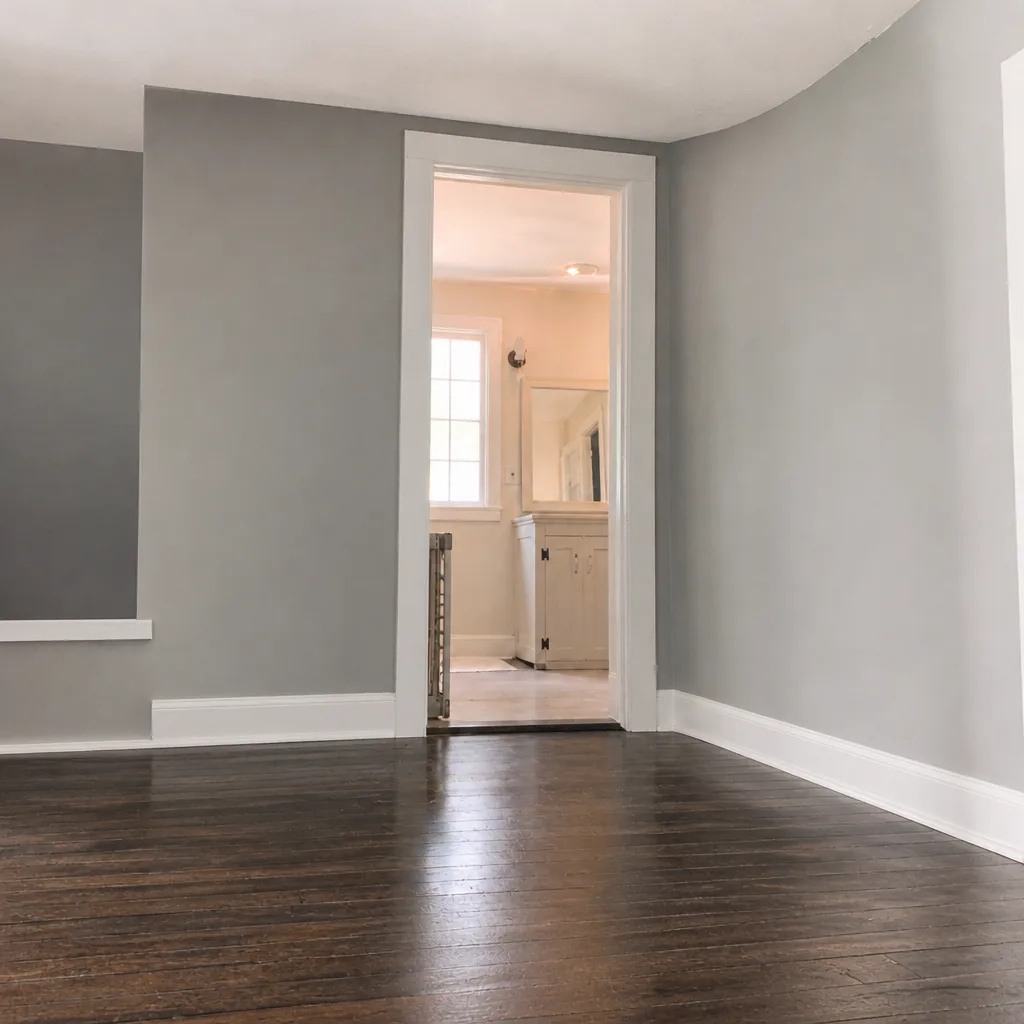
Whole-system duct and dryer vent check with before-and-after photos - you see exactly what came out of your vents
That "$99 whole-house special" is a bait ad - the real number appears once they are in your hallway, or the "clean" is a shop-vac at the register. We photograph the inside of your ducts before and after instead.
Choosing the Right Air Duct Cleaning Brand: A Buyer’s Guide for New Orleans
Most HVAC companies in New Orleans list duct cleaning on their service menu. That’s the problem. A menu listing tells you a company is willing to take the job, not that it’s built to do it well. The equipment, the technician training, and the standard for what counts as “done” are wildly different between a duct specialist and a generalist who added ductwork to the price sheet. This guide gives you the questions, the equipment benchmarks, and the documentation standards to tell the two apart before anyone sets foot in your home. You’ll learn how to audit a company’s machinery, what certifications actually require, and why operational specificity beats brand recognition in this market.
Quick Answer
The right air duct cleaning brand in New Orleans is the one whose entire business is built around duct systems, not an HVAC generalist offering duct cleaning as an add-on. Look for professional-grade agitation and HEPA capture equipment used on every job, technicians with real tenure, camera inspection as a standard step rather than an upsell, and before-and-after documentation of your own ducts. Brand recognition on a truck wrap means less than the machinery in the driveway.
Styles & brands we work with
- Whole-home duct cleaning
- Dryer vent cleaning
- Camera inspection
- Sanitizing & deodorizing
Table of Contents
- Specialist vs. Generalist: What’s the Real Difference?
- How to Audit a Company’s Equipment Before Booking
- What NADCA ACR Certification Actually Requires
- Why Local Single-Trade Specialists Outperform National Franchises
- Using Before-and-After Documentation as a Quality Benchmark
- How New Orleans Conditions Shape Duct Work
- The Seven Questions to Ask Before You Book
- Duct Repair and Air Quality Upgrades in One Visit
Specialist vs. Generalist: What’s the Real Difference?
A duct cleaning specialist owns equipment that exists for one purpose: agitating and capturing what’s inside ductwork. A generalist owns a vacuum and repurposes it. That’s the operational gap, and it shows up in three places.
Equipment depth. A specialist invests in tools that only make sense if ductwork is the whole business. Rotary brush systems that physically agitate debris off duct walls. HEPA-rated vacuums sized to pull a full negative pressure on a residential system. Air filtration units borrowed from the remediation trade. A generalist running duct cleaning as a side revenue line can’t justify that spend, so the tools get cheaper and the results get thinner.
Technician training. A dedicated air duct cleaning team does duct work every day. They know how a flex run behaves, where a return plenum hides debris, and what a disconnected boot feels like under a brush. A generalist technician splits time between refrigerant work, furnace diagnostics, and duct jobs, so duct experience accumulates more slowly. Our technicians have up to 14 years of experience in this specific trade.
Job completion standards. A specialist defines “done” as the whole system cleaned plus a documented before-and-after record. A generalist often defines “done” as the visible registers cleared and the invoice signed. Those are not the same product, even if the line item on the estimate reads identically.
In New Orleans, this distinction matters because duct systems here deal with heavy humidity loads and long cooling seasons. A crew that only touches ducts occasionally won’t read the system the way a specialist does. That’s why we built our entire operation around ductwork health rather than adding it to an HVAC menu.
How to Audit a Company’s Equipment Before Booking
You can vet a company’s machinery over the phone in about five minutes. Ask specific questions and listen for specific answers. Vague responses are your signal to call the next company.
- Ask what vacuum they run and its CFM rating. A serious operation knows its own equipment’s airflow capacity. If the person on the phone can’t tell you what machine is coming to your house, the crew probably doesn’t have a clear standard either.
- Ask about agitation tools, not just the vacuum. Vacuum alone doesn’t lift caked debris off duct walls. Ask whether they use rotary brush systems. We run professional-grade Rotobrush rotary brush systems on every job, so the answer here is unambiguous.
- Ask how they capture what they dislodge. The core mechanic of good duct work is two-step: agitate, then capture. A vacuum that pulls the debris into a HEPA-rated filter is the standard. We pair Rotobrush with Nikro HEPA vacuum equipment so contaminants leave the system rather than recirculating into your living space.
- Ask about filtration grade. Remediation crews use a different class of equipment than residential cleaning outfits. Our Abatement Technologies air filtration units are the same class used in professional remediation projects.
- Ask whether camera inspection is standard or an add-on. Camera inspection shows what a brush can’t reach and confirms the work. If a company treats it as an upsell, the base service wasn’t scoped to verify itself.
- Ask how they document the job. Before-and-after photos of your actual ducts are non-negotiable. If they don’t provide them, they aren’t measuring their own output.
Listen for brand names. A company that names its equipment isn’t boasting, it’s showing you the workbench. Ask again if the answer stays generic.
What NADCA ACR Certification Actually Requires
NADCA stands for the National Air Duct Cleaners Association, and its ACR designation (Air Systems Cleaning Specialist) is the certification most often used as a trust signal on duct cleaning websites. The problem is that many sites paste the NADCA logo without holding the credential, and many customers never check.
The ACR credential requires a technician to pass an exam on duct system cleaning practice, including source removal methodology, safety protocols, and system component knowledge. It’s a technician-level certification, not a company-level stamp. That distinction matters: a company can advertise NADCA affiliation while sending out technicians who aren’t individually certified.
How to verify:
- Ask for the certification number of the technician assigned to your job, not just the company name.
- Cross-check the NADCA directory directly if the company advertises membership.
- Ask what the technician’s daily role is. If they split time between duct cleaning and unrelated HVAC repair, the certification is probably being used as a marketing asset more than a working standard.
- Ask about continuing education requirements. NADCA certifications carry renewal obligations, so a technician who stays certified is staying current.
New Orleans duct systems operate in a humid climate with heavy seasonal cooling load. A technician who understands system hygiene in this environment will read the same certification standards differently from someone in a dry market. Certification is a floor, not a ceiling. Pair it with equipment depth and documentation practices and you have a real picture.
Why Local Single-Trade Specialists Outperform National Franchises
National franchise chains bring recognizable branding into a market, and that branding is often what a homeowner uses as a substitute for doing research. It’s understandable. The brand is familiar, so the assumption is that the service is standardized. In duct work, brand familiarity rarely translates to better outcomes.
Three reasons why, from our view of the New Orleans market:
1. Franchise economics push toward volume. A franchise location has overhead the independent operation doesn’t carry, and the model rewards high job counts. That pressure tends to shorten job times and standardize the package, which doesn’t always match what a particular New Orleans home actually needs. Ductwork here varies widely by building age and neighborhood: a raised shotgun in the Marigny doesn’t have the same duct layout as a mid-century ranch in Lakeview or a new build in Gentilly.
2. Local specialists know the local environment. New Orleans humidity is not a seasonal inconvenience here, it’s a year-round operating condition for ductwork. Condensation inside poorly sealed systems, mildew growth on damp insulation, and musty odors that surface in the cooling season all show up in predictable patterns. A local specialist has seen those patterns across hundreds of homes and reads the symptoms faster.
3. Single-trade focus means single-trade accountability. When ductwork is the whole business, the reputation hinges on it. When it’s one line among a dozen, the duct work has no dedicated standard. That’s why New Orleans Duct Cleaning stays inside three services: air duct cleaning, dryer vent cleaning, and air duct repair.
Using Before-and-After Documentation as a Quality Benchmark
Before-and-after documentation is the single most reliable way to judge duct cleaning quality, because it forces a company to measure its own work. A crew that photographs the inside of your ducts before cleaning and again after has committed to a standard. A crew that doesn’t has left the definition of “clean” to the invoice.
Here’s what good documentation includes:
- Photos of the main trunk line and at least one branch run, before and after, taken from the same camera position.
- Photos of the return plenum, which is where debris concentrates in most residential systems.
- Camera inspection footage or stills of any segment the customer requested.
- A written summary noting what was found, what was cleaned, and any component needing repair.
The reason this standard matters more in New Orleans than in most markets is the environmental load. Fine particulate from the air gets pulled into systems year-round, and the humidity means that dust can cling to duct walls rather than move freely. A photograph proves that the brush actually reached the duct wall and that the debris came off. Without it, you’re trust-falling backward into the invoice.
When we do a job, the before-and-after set goes to the customer before we pack up. It’s not a premium add-on; it’s how we verify the standard we promised.
How New Orleans Conditions Shape Duct Work
Ductwork in New Orleans has a specific set of demands that don’t apply in most of the country. Understanding them helps you judge whether a company’s service scope accounts for them.
Long cooling season. Systems here run six or more months of the year, which means more air moves through ductwork and more particulate deposits on the walls. A cleaning interval that would last three years in a cooler climate might only be sufficient for half that here.
Humidity and condensation. When cool air moves through ductwork in a humid attic or crawl space, condensation happens on the outside of the duct and inside poorly insulated runs. Damp duct lining is a growth environment for mildew, which is why musty odors from vents are a common complaint in homes across New Orleans. Cleaning alone won’t solve a moisture problem; proper cleaning paired with attention to duct integrity does.
Older housing stock and varied duct design. Neighborhoods like the French Quarter, Uptown, Mid-City, and the Marigny have older homes where duct systems were retrofitted or expanded over time. That means more fittings, more opportunities for disconnects, and more variation in how well the system was sealed. A specialist trained on system integrity is far more useful here than a generalist running a one-hour standard job.
Dust and construction particulate. Renovation activity around the city kicks up fine particulate that gets pulled into return grilles. Regular professional cleaning can help, but so does a filtration upgrade.
When we work in New Orleans, we treat the whole system: what’s inside the ducts, how the system is sealed, and what filtration sits downstream of the air handler. Those are connected problems, and addressing them together produces better results than a duct-only scope.
The Seven Questions to Ask Before You Book
Commit these to memory or save this list. A good company will answer every one without hesitation.
- What equipment will be on my property? You should hear specific brand or model names, and the answer should include both agitation tools and vacuum capture. If the response is “professional equipment,” the answer isn’t specific enough.
- Is rotary brush agitation included as a standard step? It should be. Vacuum alone is insufficient.
- Is camera inspection standard, and do I get the footage? If it’s an add-on or a preview, that’s a red flag.
- Will you document the job before and after? Yes is the only acceptable answer.
- What certifications does the specific technician assigned to me hold? Not the company – the technician.
- Do you also repair ductwork, or just clean it? A company that can only clean will flag breaches but leave them for someone else. We repair what others only report.
- What’s the flat price for a full system, and what’s the written scope? The estimate should be a written document with the scope defined, not a per-vent figure.
If any of these answers drift, ask follow-up. A specialist wants to talk about the method; a generalist wants to talk about the price.
Duct Repair and Air Quality Upgrades in One Visit
Two things separate a specialist from a duct cleaning-only operation: the ability to fix what cleaning reveals, and the ability to upgrade the air quality system while the ducts are open. Both matter in New Orleans because the system has been running long cooling seasons for decades.
Duct repair. Cleaning often surfaces problems: disconnected flex runs, breached boots, damaged plenum tape, deteriorated insulation. A generalist flags these and schedules the customer with a separate HVAC company for the fix. We do both. That means the duct system isn’t left in a half-fixed state waiting on a second appointment.
Air quality systems. Whole-home filtration upgrades make sense to plan while a technician already has the system open. We stock and install Honeywell and Aprilaire equipment, so the upgrade can happen on the same visit rather than requiring a second contractor to source and install it.
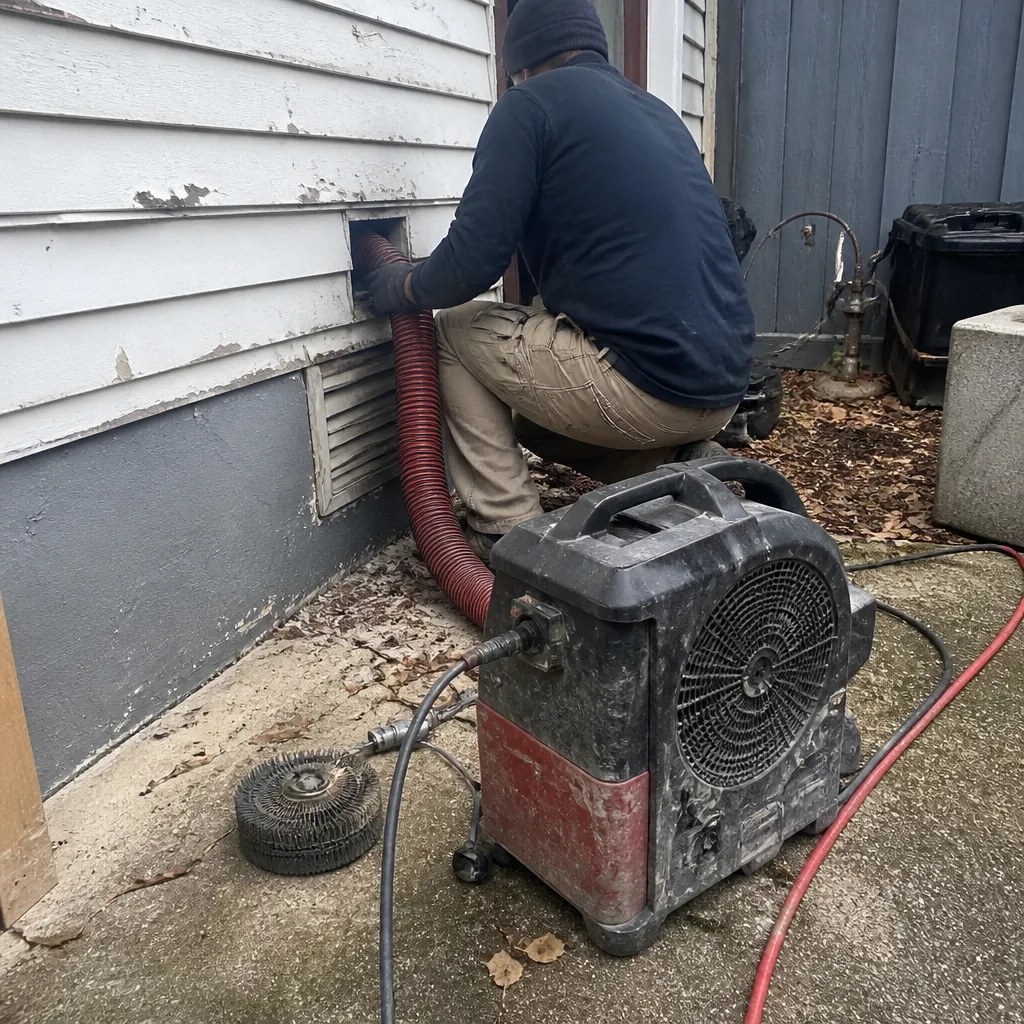
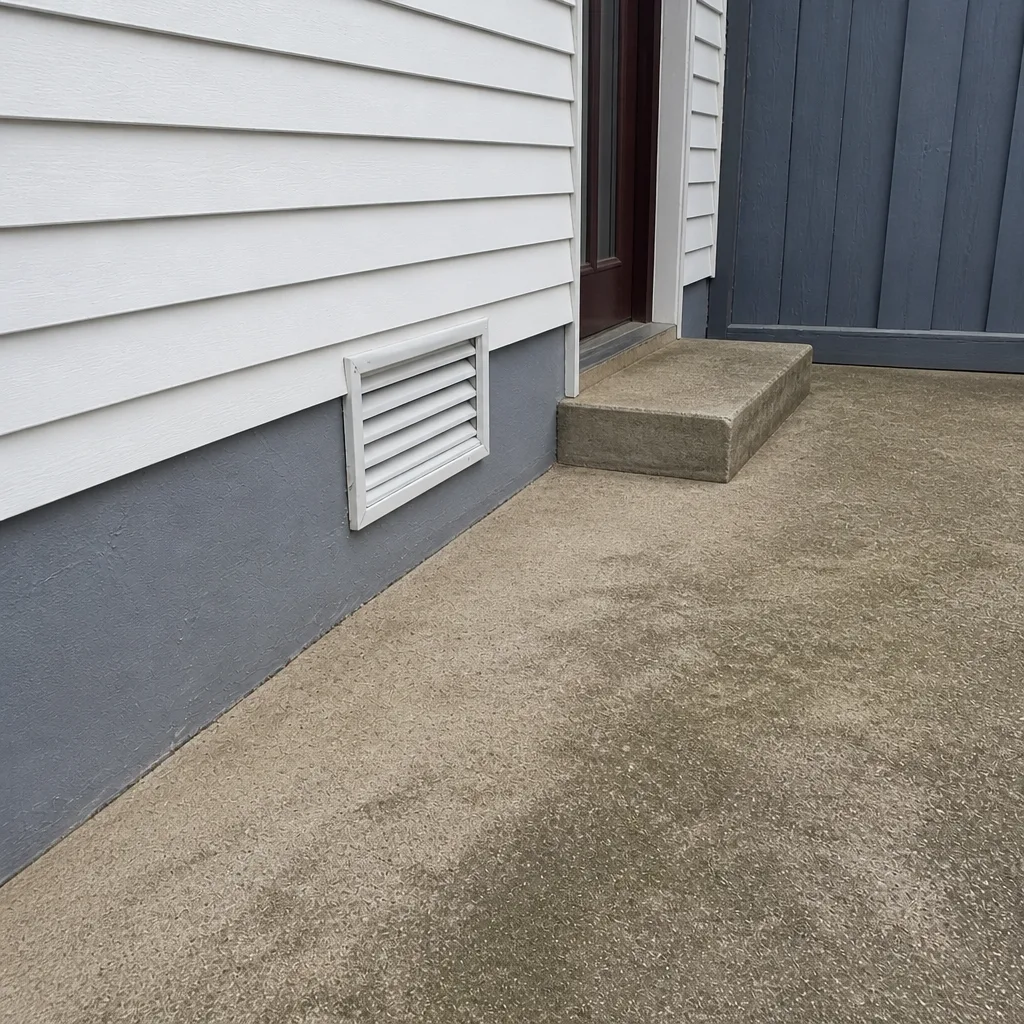
Dryer vent cleaning. This is a separate but frequently paired service. Lint accumulation in a dryer vent is a leading cause of residential fires, and the cleaning method overlaps with duct work: agitation plus HEPA capture. Ask whether the company offers it as a dedicated service or as an afterthought. Ours is a full service line, not an add-on.
All three services under one contractor means one scoping visit, one crew, one documented report, and one accountability line. That matters in a market like New Orleans where coordinating multiple contractors across a single home can stretch into weeks.
Common Mistakes to Avoid
- Booking on price alone. If the quote is dramatically lower than everyone else’s, either the scope is trimmed or the equipment isn’t real. Ask what’s included and which machine comes to the house. In New Orleans, a fast bolt-on job that runs a shop vac through registers won’t touch the trunk line, and the trunk line is where most of the problem lives.
- Assuming NADCA logo equals NADCA technician. Verify the individual, not the website badge. Ask for the certification of the tech assigned to your job.
- Skipping the camera inspection. Without it, you have no proof the work reached where it needed to. Photographs and video are the difference between faith and evidence.
- Cleaning without repair. If the crew flags disconnected runs and leaves them, the system will re-contaminate within months. In New Orleans’ cooling climate, that’s faster than most people expect. Ask upfront whether the company can fix the problems it finds.
- Treating musty odors as normal. Persistent odors from registers in a New Orleans home usually point to moisture in the duct system, not just dust. Cleaning alone may not solve it. Ask about duct integrity and insulation condition.
- Overlooking the dryer vent. Lint in the vent is a fire hazard, and it’s easy to skip because the ducts feel like the more important job. Both should be on the same visit if the company offers both.
- Not asking for documentation. A company that doesn’t photograph before and after cannot show you the difference it made. That should be the primary deliverable, not a courtesy.
See the difference
 Before
 After
 Before
 After
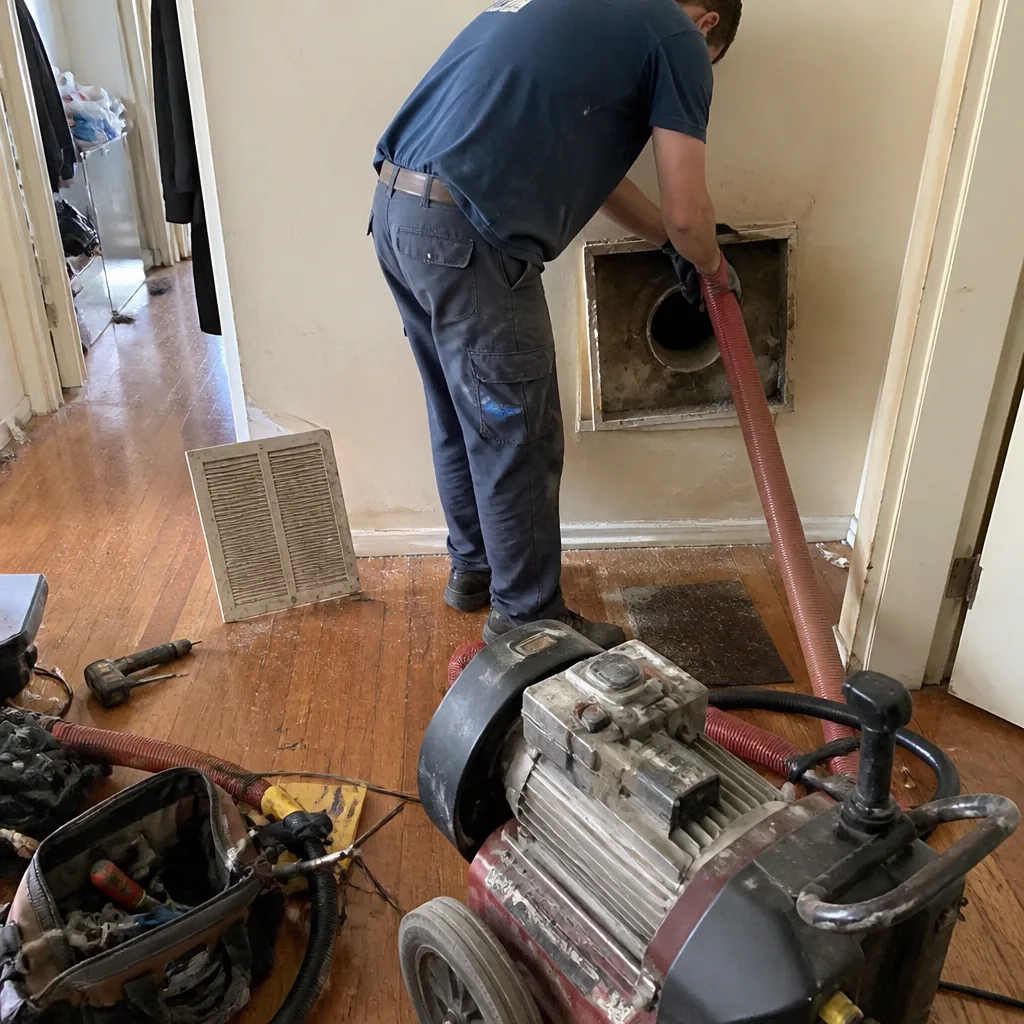 Before
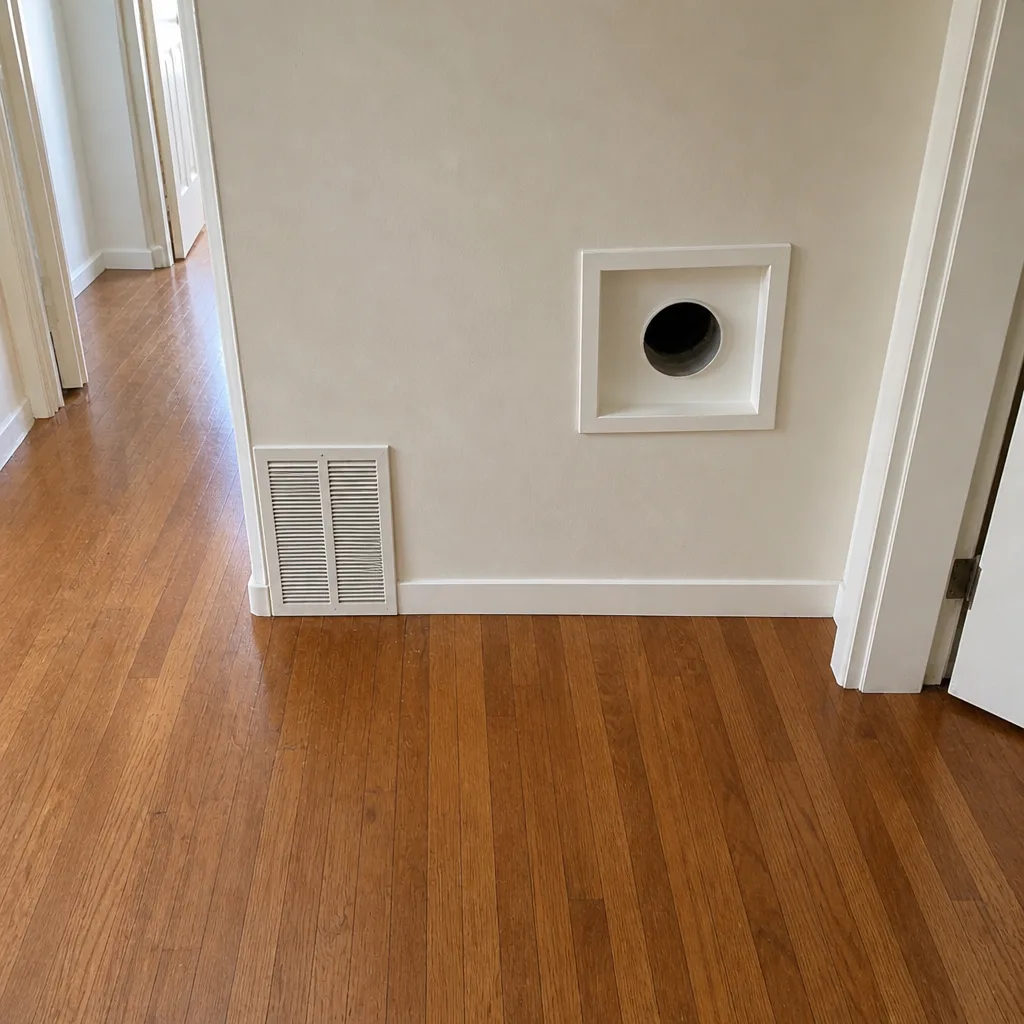 After
When to Call a Professional
You’ll know it’s time when the symptoms pile up. Visible dust settling on furniture faster than usual. Musty odor at the register when the system kicks on. Allergy symptoms that get worse indoors. A renovation that kicked up fine particulate. A cooling bill that creeps up without an obvious cause. A dryer that takes two cycles to finish, or lint visible around the vent hood. Those signals in a New Orleans home usually mean the system needs a professional rather than a homeowner-grade shop vac approach.
High-tension components are not user-serviceable, and duct systems aren’t either: the capture equipment is what makes the job work, and the wrong approach re-releases dust into the home. When you’re ready to schedule, New Orleans Duct Cleaning offers free estimates in New Orleans. Call (833) 749-5104. We answer 24/7. Fast dispatch from 7am to 7pm, Sunday through Friday.
Frequently Asked Questions
Air duct cleaning in New Orleans is priced per system, not per vent, and a written estimate sets the final price. The range depends on system size, number of zones, accessibility, and whether repair or an air quality upgrade is added. A flat per-system quote with a defined scope is the honest structure. Call (833) 749-5104 – the estimate is free.
Cheap quotes come from cheaper scope. Per-vent pricing, single-pass vacuum-only work, no camera inspection, no documentation, and unrepaired breaches describe most of the low number. If the scope doesn’t name the equipment, the price usually reflects a shop vac and a fast pass. Call (833) 749-5104 for an estimate with a written scope.
Before-and-after photos of your own ducts are the standard. Camera inspection footage is second. A report noting what was cleaned, what was found, and what was repaired rounds out the evidence. A company that provides all three has committed to a measurable standard. Call (833) 749-5104 for a job documented end to end.
Most homes in New Orleans benefit from professional cleaning every few years, but the cooling season here runs long enough that visible symptoms drive the schedule more than a fixed interval. Dust buildup, musty odors, post-renovation particulate, or a recent move into an unfamiliar home all justify a look. Call (833) 749-5104 to talk through your situation.
Look for rotary brush agitation plus a HEPA-rated vacuum working together, and a filtration unit of the same class used in remediation work. In our case that means Rotobrush rotary brush systems, Nikro HEPA vacuums, and Abatement Technologies filtration. Brand names on the equipment list tell you more than brand names on the truck. Call (833) 749-5104 to hear ours.
It should. A specialist scopes all three at once, cleans and repairs ducts, cleans the dryer vent, and installs whole-home air quality equipment on the same visit. See our dryer vent cleaning service and ask how it pairs with the duct job. Call (833) 749-5104 for a combined estimate.
The Bottom Line
The right duct cleaning brand in New Orleans is the one whose entire business is ductwork. Equipment specificity, technician tenure, camera inspection as standard, and before-and-after documentation are the four measurable tests. Any company that answers those four clearly is worth a call. Any company that dodges them isn’t, no matter what’s on the truck. Our technicians have up to 14 years of experience and run professional-grade equipment on every job: Rotobrush rotary brush systems, Nikro HEPA vacuums, and Abatement Technologies filtration. Duct cleaning, dryer vent cleaning, and duct repair under one contractor.
Ready to schedule a free estimate? Call New Orleans Duct Cleaning at (833) 749-5104. We answer 24/7. Fast dispatch from 7am to 7pm, Sunday through Friday. Guarantee and licensing details are confirmed at the time of estimate.
Written by the team at New Orleans Duct Cleaning.